

Are you wondering how to stop obsessive thoughts? Do you feel stuck in your head, replaying the same worries or images over and over? You’re not alone.
Many people struggle with obsessive thoughts that feel overwhelming and hard to control. These obsessive thoughts and anxiety patterns can make it hard to live in the present moment and enjoy life. These thoughts can make it difficult to relax, sleep, focus, or enjoy everyday life. They’re especially common in people with obsessive-compulsive disorder (OCD), anxiety, depression, trauma-related disorders, and even ADHD.
The good news: obsessive thoughts are treatable.
At We Level Up Washington, you can access compassionate, evidence-based care through our Mental Health Services to help you stabilize your thoughts and feel grounded again.
Skip To
Table of Contents
What Are Obsessive Thoughts?
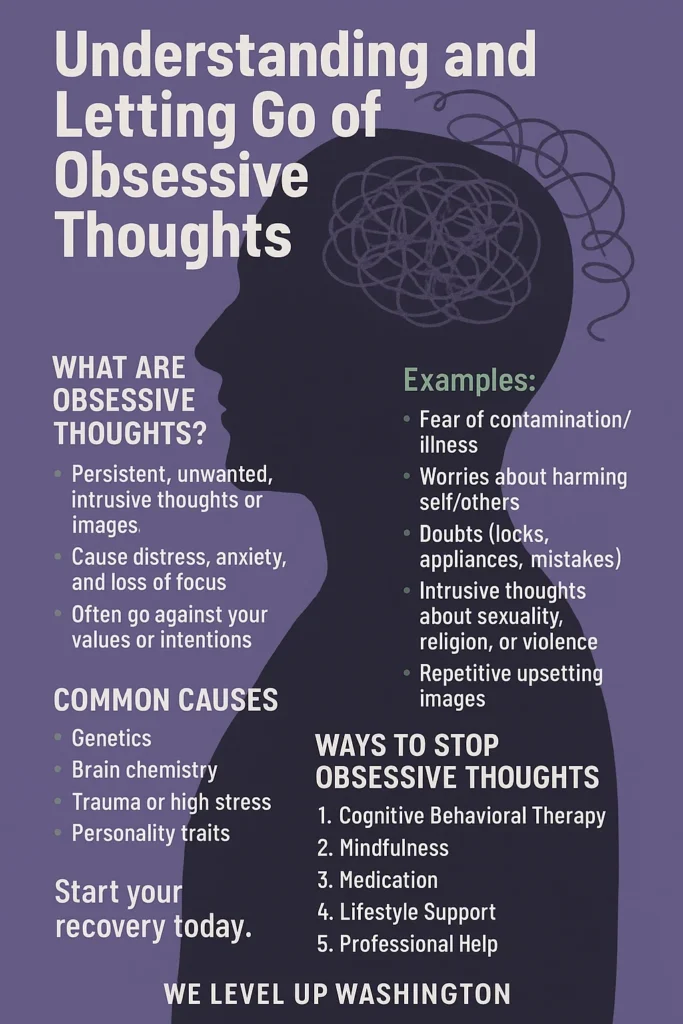
Obsessive thoughts are unwanted, intrusive thoughts or mental images that keep showing up and are hard to dismiss. They often feel disturbing, irrational, or out of character, but they still cause very real distress.
Common signs & symptoms of obsessive thoughts include:
- Fear of getting sick or contaminated
- Fear of harming yourself or someone else
- Constant worries about doors being unlocked, appliances left on, or making serious mistakes
- Disturbing or taboo sexual, religious, or violent images
- Repetitive mental “loops” that won’t stop and make you feel guilty, ashamed, or afraid
These are all thoughts, including fears, images, and urges, that feel sticky and hard to let go of.
For many people, these thoughts lead to compulsive behaviors or rituals. They do these things to reduce anxiety. This can include checking, counting, repeating, or seeking reassurance. This cycle of obsession-compulsion is a key part of OCD. It can take up a lot of time, often hours each day.

End the Emotional Pain. Get Your Life Back.
Feeling Depressed, Anxious or Struggling with Mental Health Illness? Get Safe Comfortable Mental Health Dual Diagnosis High-Quality Therapy From Counselors That Care. Begin Your Recovery Now.
Hotline: (509) 348-4077

Obsessive Thoughts vs Overthinking
You should know the difference between typical overthinking and obsessive thoughts anxiety. There are times when both can be stressful, but obsessive thinking :
- Repeats and can’t be stopped
- causes a lot of stress and worry
- Involve disturbing mental images or unwanted scenarios
- Do something over and over again, or start a ritual
When someone has OCD obsessive thoughts may be illogical and upsetting. This is especially true when these thoughts lead to compulsions that disrupt their daily life.
How Obsessive Thoughts Affect Mental Health
People with the following mental illnesses often have obsessive thoughts:
People with OCD have a pattern of habits and compulsions that make it very hard for them to go about their daily lives. Compulsions are the things that people do to try to stop or lessen the worry that their unwanted thoughts cause. Obsessions are the thoughts that people can’t stop having. The NIH says that some people might be obsessive about germs and wash their hands dozens of times every day.
A lot of people who have anxiety worry too much, usually about the future or mistakes they think they’ve made. Negative thoughts about despair, failure, or past mistakes can also be a sign of depression.
ADHD obsessive thoughts may look different. People with ADHD often have mental restlessness, which means their thoughts move quickly from one subject to another. When this mental restlessness is combined with worry, it can lead to obsessive or bothersome thoughts.
Common Causes of Obsessive Thoughts
Common causes of obsessive thoughts include:
- Genetics: OCD and anxiety disorders often run in families.
- Brain chemistry: Imbalances in neurotransmitters like serotonin may play a role.
- Trauma and stress: Experiencing a traumatic event can trigger intrusive thoughts.
- Personality traits: People who are highly conscientious or sensitive may be more prone to obsessive thinking.
How to Stop Obsessive Thoughts
Are you wondering how to stop obsessive thoughts? You can stop having obsessed thoughts. Here’s some good news: some tried-and-true methods and treatments can help. It’s about learning the types of OCD and better ways to deal with them.
1. Cognitive Behavioral Therapy (CBT)
Cognitive Behavioral Therapy (CBT) is one of the best ways to help obsessive-compulsive disorder (OCD). To help people face their fears, a type of CBT called Exposure and Response Prevention (ERP) is often used.
2. Methods based on mindfulness
Being mindful helps put some distance between you and your negative thoughts so you can watch them without responding. Obsessive thinking can make you feel bad, but breathing exercises, guided imagery, or grounding techniques can help.
3. Lifestyle and Daily Support
You can also make a difference by doing little things every day:
- Getting enough sleep and food
- Moving around or doing yoga
- Cutting back on coffee and screen time
- Getting to know other people through support groups
4. Professional Treatment
One of the most important things you can do if your obsessive thoughts are getting in the way of your daily life is to see a mental health expert. They can help you find out what’s really going on, give you structured treatment plans, and help you heal for the long run.
Get Help. Get Better. Get Your Life Back.
Searching for Accredited Dual Diagnosis Mental Health Centers Near You?
Even if therapy failed previously, or are in the middle of a difficult crisis, we stand ready to support you. Our trusted behavioral health specialists will not give up on you. When you feel ready or just want someone to speak to about counseling alternatives to change your life call us. Even if we cannot assist you, we will lead you to wherever you can get support. There is no obligation. Call our hotline today.
FREE 24/7 Dual Diagnosis Mental Health Services HotlineWhy Choose We Level Up?
At We Level Up Washington rehabilitation center, we treat obsessive thoughts and related health disorders with compassion, evidence-based care, and a focus on holistic healing. Our programs are built to support individuals facing:
- Obsessive-compulsive disorder (OCD)
- Anxiety and depression
- Attention-deficit hyperactivity disorder (ADHD)
- Personality disorders and trauma-related obsessive thoughts
We offer personalized treatment that includes:
- Holistic approaches like mindfulness and movement
- Aftercare planning to support long-term recovery
- CBT and ERP therapy
- Medication management
- Group therapy and family support

Comfortable Facilities & Amenities
High-Quality Mental Health Services & Behaviroal Health Substance Abuse Treatment
Rehab Centers TourRenowned Mental Health Centers. Serene Private Facilities. Inpatient Rehab Programs Vary.
Mental Health Helpline: (509) 348-4077Proven recovery success experience, backed by a Team w/ History of:
15+
Years of Unified Experience
100s
5-Star Reviews Across Our Centers
10K
Recovery Success Stories Across Our Network
- Low Patient to Therapist Ratio
- Comprehensive Dual-Diagnosis Treatment
- Complimentary Family & Alumni Programs
- Coaching, Recovery & Development Events
- Comfortable Onsite Medical Detox Center
FAQs about Obsessive Thoughts
-
Where can someone in Spokane Valley, Washington, get help for obsessive thoughts?
We Level Up Washington in Spokane Valley helps people with obsessive thinking, OCD, and other related mental illnesses.
-
Where can you get help for obsessive thoughts in Liberty Lake, Washington?
Our Spokane Valley treatment center helps people with OCD, anxiety, ADHD, and other mental health problems. It is close to Liberty Lake.
-
Where can you get help for obsessive thoughts in Cheney, Washington?
We Level Up Washington is a short drive from Cheney and helps people with all kinds of problems related to obsessive thinking.
-
Is thinking about things over and over again a mental illness?
Though obsessive thinking is not a disorder in and of itself, it is often a sign of a mental illness such as OCD, anxiety, depression, or conditions linked to trauma.
-
What kinds of solutions for OCD does We Level Up Washington offer?
CBT, Exposure and Response Prevention (ERP), and medication management are some of the methods we offer for OCD that have been shown to work.
-
Are adults with OCD treated differently than children or teens?
Yes. A lot of the time, adults with OCD need help with their relationships, jobs, and daily tasks. The main methods are similar.
-
Can individuals with ADHD also have obsessive thoughts?
Yes. People with ADHD can have unwanted thoughts, especially when they are anxious or have been through a traumatic event.
-
When should I talk to a mental health professional about my obsessive thoughts?
If your obsessive thoughts are bothering you, making it hard to sleep, or affecting your relationships, school, or work, you should seek help. Getting help from a mental health worker early on can stop patterns from getting worse or taking more time.
-
What other kinds of care are there besides drugs?
Cognitive behavioral therapy (CBT), ERP, mindfulness, support groups, and making changes to your lifestyle help lower anxiety.
-
Do all obsessive thoughts mean I have OCD?
No. A professional examination can help you see if your symptoms match OCD or another mental illness. It can also show you what treatment would be best for you.
World-class, Accredited, 5-Star Reviewed, Effective Mental Health Dual Diagnosis Programs. Complete Integrated Inpatient Rehab with Free Post Discharge Therapy Planning.
Hotline: (509) 348-4077End the Emotional Pain Rollercoaster. Gain Stability & Happiness Through Recovery Treatment. Start Mental Health Counseling Today. Get Free No-obligation Guidance by Behaviroal Health Specialists Who Understand Mental Health Recovery.
Related Readings
External Links
NIMH: Obsessive-Compulsive Disorder
Internal Links
Final Thoughts
Life can feel overwhelming when you have anxious and obsessive thoughts. But you are not powerless, and you’re not alone. You can get better, learn healthy ways to deal with things, and get your peace of mind back with the right help.
If you’re ready to take the first step, We Level Up Washington is here to walk with you.
Call today to speak with our team and learn more about our programs. We Level Up Washington: (509) 348-4077. Your next step starts here.