

A lot of people have trouble paying attention. From time to time, everyone gets off track. But for some, attention issues occur daily and get in the way of their work, school, and relationships. These long-lasting problems may be linked to signs of attention deficit disorder.
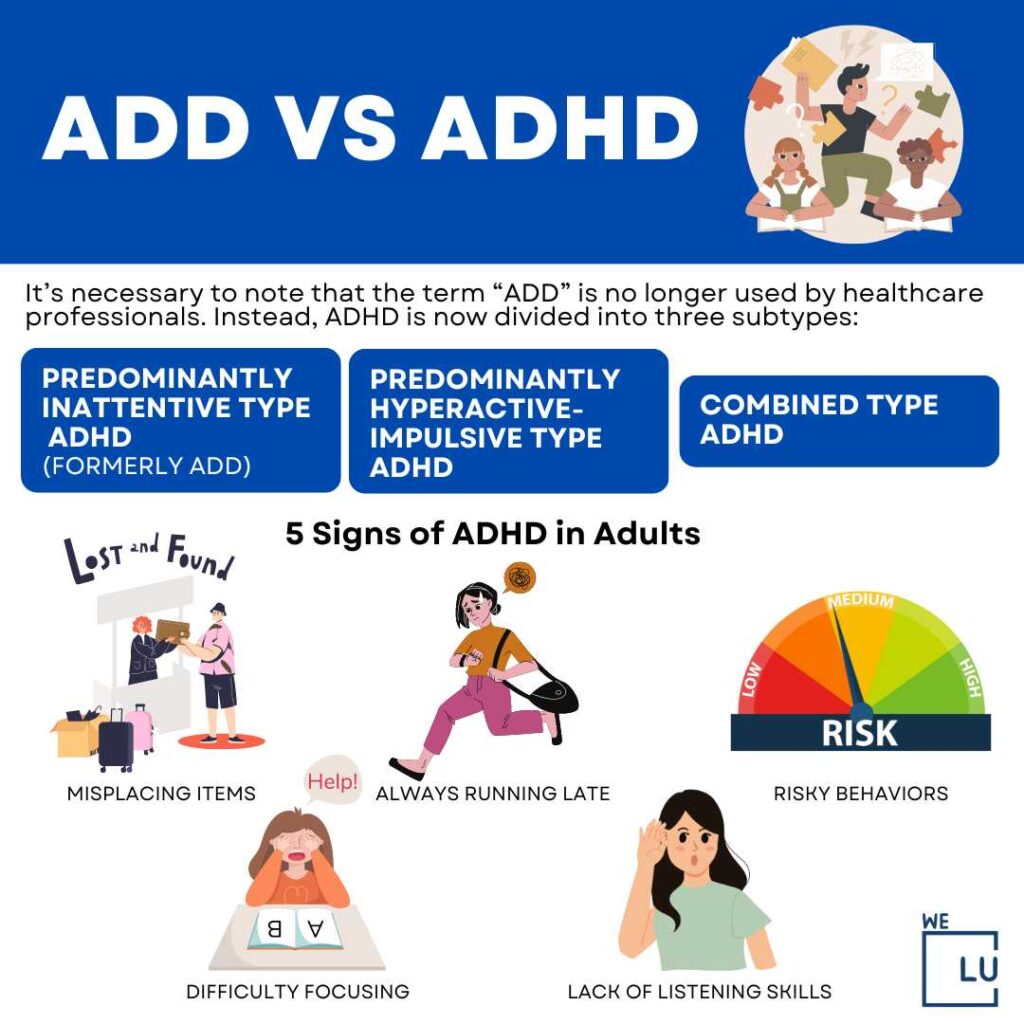
People with Attention Deficit Disorder (ADD) find it hard to focus, keep their things in order, and get things done. You’re not being lazy or not putting in the work. With the correct assistance, this condition is curable. Attention deficit disorder symptoms are clearly described in this article. There will be information about what ADD is, how to get a mental health evaluation, what might cause it, and how to deal with it in a healthy way.
What Is Attention Deficit Disorder?
People with Attention Deficit Disorder have trouble paying attention and concentrating. This kind of ADHD is sometimes called “inattentive.” People with this problem have more difficulty concentrating than being hyperactive.
ADD is something you can’t choose to have. Not working hard or being a bad parent is not to blame. Different parts of the brain work in other ways, especially those that control attention, planning, and order.
Any age can be affected by ADD. A lot of people are diagnosed much later in life, after having a hard time for years.
Attention Deficit Disorder Symptoms
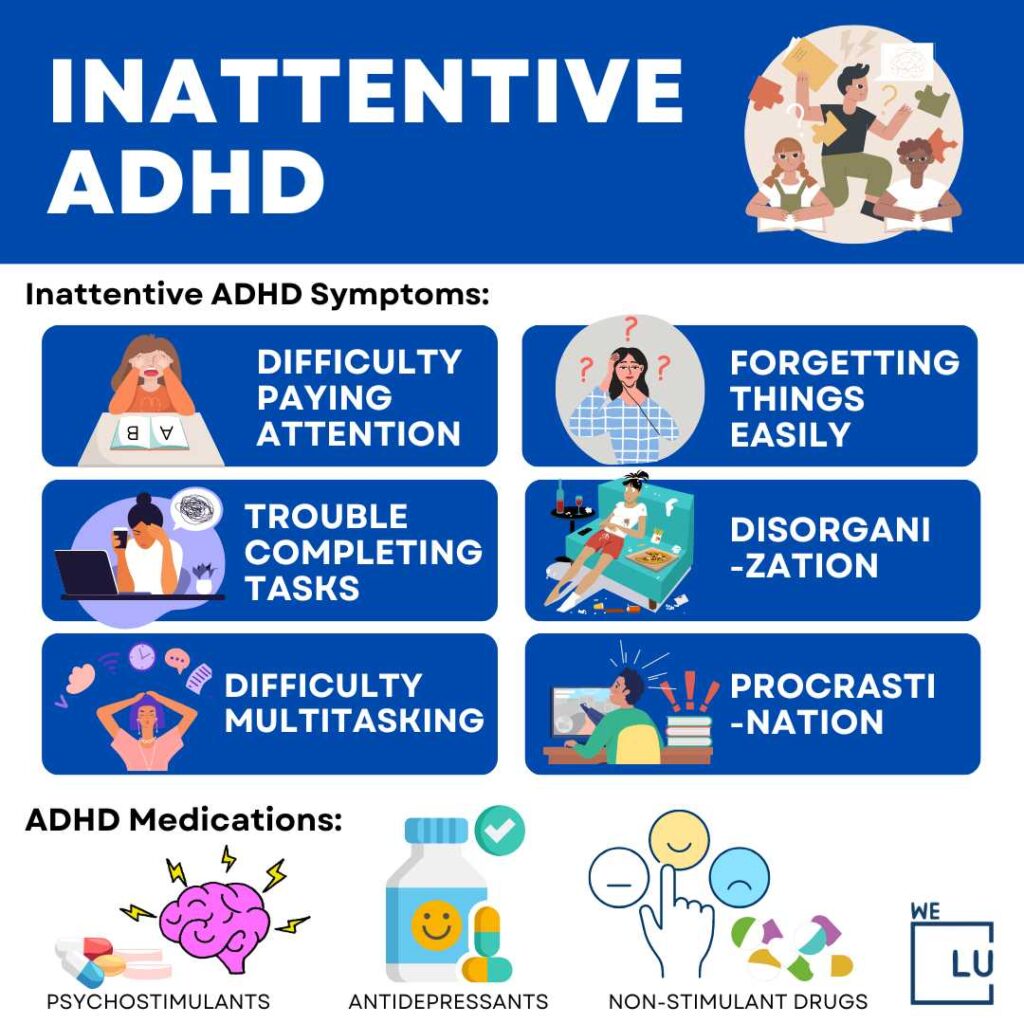
People with attention deficit disorder often have trouble focusing, remembering things, and getting things in order. Most of the time, these symptoms persist and interfere with daily life.
Common Focus and Attention Symptoms
People may:
- Get distracted easily
- Daydream often
- Miss details
- Have trouble listening
- Forget instructions
- Lose items like keys or phones.
Organization and Task Problems
People may:
- Have trouble starting tasks
- Leave projects unfinished
- Miss deadlines
- Struggle to plan or prioritize
- Feel overwhelmed by simple tasks.
Emotional Symptoms
Some people also feel:
- Frustrated
- Low confidence
- Easily stressed
- Mentally tired
These signs can look different for every person. Few people, mostly adults, can hide them well.

Skip To:
Learn More:
- Attention-Deficit Hyperactivity Disorder (ADHD), Signs, Symptoms, Causes, Types & Treatments
- Postpartum Depression Treatment. Symptoms, Causes, and Risks.
- Mood Disorders Symptoms, Causes & Treatments
- Anxiety Treatment, Therapies, CBT, Medications, Anxiety Disorder Symptoms, Phobia-Related Disorders & Separation Anxiety Disorder
- Psychiatric Disorders, Symptoms, Causes, Types, and Treatment
Inattentive Disorder Traits in Daily Life
Inattentive disorder traits can affect many parts of life.
At school, a person may:
- Struggle to follow lessons.
- Forget homework
- Make careless mistakes
At work, a person may:
- Miss details
- Feel overwhelmed by tasks.
- Have trouble managing time
At home, a person may:
- Forget chores
- Lose track of plans
- Feel mentally drained
These struggles are not about intelligence. Many people with ADD are very smart but have trouble using their skills consistently.
ADD Causes and Signs
There is no single cause of ADD. Several factors may work together.
Brain Differences
The brain areas that control focus and attention may work differently. This can make it hard to stay on task or block distractions.
Genetics
ADD often runs in families. If a parent or sibling has attention problems, the risk may be higher.
Early Development Factors
Some early life factors may play a role, such as:
- Premature birth
- Low birth weight
- Early brain development changes
ADD causes and signs are not related to personal failure. They are linked to how the brain processes information.
ADD Diagnosis Overview
Getting the right diagnosis is important. Many people live for years without knowing why daily life feels so hard.
How Diagnosis Works
An ADD diagnosis overview usually includes:
- Talking about symptoms
- Reviewing school or work history
- Questionnaires or rating scales
- Input from family members
There is no single test. A trained mental health or medical professional looks at patterns over time.
Why Diagnosis Matters
Diagnosis of ADHD helps in:
- Explain long-term struggles
- Reduce self-blame
- Guide treatment and support
- Improve quality of life.
ADD Management Strategies That Help
ADD management strategies focus on making daily life easier and more organized. Many people use a mix of tools.
Therapy and Coaching
Therapy can help people:
- Build focus skills
- Improve organization
- Learn coping tools
- Reduce stress
Coaching focuses on practical skills such as planning and time management.
Daily Structure
Helpful habits include:
- Using planners or reminders
- Breaking tasks into small steps
- Creating routines
- Setting simple goals
Lifestyle Support
Lifestyle changes can also help:
- Good sleep routines
- Healthy meals
- Regular physical activity
- Quiet workspaces
These tools do not “fix” ADD, but they make symptoms easier to manage.
Attention Deficit Disorder Facts
Overview
Attention deficit disorder (ADD) is an outdated term for what experts now call attention deficit hyperactivity disorder (ADHD). The term ADD first appeared in the third edition of the Diagnostic and Statistical Manual of Mental Disorders (DSM-3), a reference manual that helps mental health professionals diagnose mental health conditions. Experts separated the condition into two subtypes. ADD with hyperactivity and ADD without hyperactivity.
ADD vs ADHD Etiologic Theories
Neurobiological factors appear to play a role in the onset of ADD. Studies of twins and adoptions offer strong evidence of a genetic link, and 20% of parents of children with ADD have the problem themselves. People with ADD might have problems in the prefrontal cortex that would affect dopamine and noradrenaline levels and structural changes in the striatum and the cortex.
ADHD Diagnosis
ADHD is a disorder that is diagnosed clinically and does not have any specific laboratory or radiologic tests. The neuropsychological tests are not as sensitive for diagnosing the disorder; hence, the disorder should be diagnosed based on the patient’s history.
The evaluation of the patient with ADHD is usually done with different rating scales and multiple informants, who may include the teachers and parents. A clinician must look for other disorders that may cause a person’s symptoms. It should not be diagnosed in the context of symptoms from another disorder, for example, a psychotic episode or manic episode.
ADD vs ADHD Comorbidity
Half of those with ADD have comorbid psychiatric disorders: 19% to 37% have mood disorders (depression, bipolar affective disorders, and dysthymia), 25% to 50% have anxiety disorders, 32% to 53% have addiction problems, and 10% to 28% have personality disorders. This comorbidity is why the diagnosis is often missed, even though the comorbid problems are
ADHD Pathophysiology
ADHD is associated with cognitive and functional deficits related to diffuse abnormalities in the brain. The anterior cingulate gyrus and dorsolateral prefrontal cortex (DLFPC) are found to be small in individuals who are suffering from ADHD.
These changes account for the deficits in goal-directed behavior. Moreover, activity in the frontostriatal region is also reduced in these individuals as measured by fMRI. It is important to understand these pathophysiological mechanisms so that pharmacotherapy is directed toward them.
End the Emotional Pain. Get Your Life Back.
Feeling Depressed, Anxious or Struggling with Mental Health Illness? Get Safe Comfortable Mental Health Dual Diagnosis High-Quality Therapy From Counselors That Care. Begin Your Recovery Now.
Hotline: (509) 348-4077

ADD and Emotional Health
Living with attention problems can affect feelings. Many people with ADD feel misunderstood or frustrated.
Common emotional effects include:
- Low self-esteem
- Anxiety
- Stress
- Feeling overwhelmed
Support for emotional health is just as important as focus skills. Treating both helps people feel more balanced.
ADD in Adults vs. Children
ADD looks different at different ages.
In children:
- Trouble focusing in school
- Forgetting instructions
- Appearing dreamy or quiet
In adults:
- Work performance issues
- Trouble managing time
- Forgetting appointments
- Feeling mentally scattered
Many adults were never diagnosed as children. It is never too late to seek help.
Get Help. Get Better. Get Your Life Back.
Searching for Accredited Dual Diagnosis Mental Health Centers Near You?
Even if therapy failed previously, or are in the middle of a difficult crisis, we stand ready to support you. Our trusted behavioral health specialists will not give up on you. When you feel ready or just want someone to speak to about counseling alternatives to change your life call us. Even if we cannot assist you, we will lead you to wherever you can get support. There is no obligation. Call our hotline today.
FREE 24/7 Dual Diagnosis Mental Health Services HotlineADD, ADHD, and How They Are Connected
ADHD comes in many forms, some of which include the signs of ADD. People of all ages can have ADHD, but the signs may look different in kids and adults. Kids with ADHD may have trouble in school, and people with ADHD often have problems at work, with managing their time, and with their relationships.
To diagnose ADHD, long-term behavior trends must be looked at. The National Institute of Mental Health says that ADHD includes issues with paying attention, acting without thinking, and keeping things in order. The right evaluation and treatment can help people focus better and feel more stable in their daily lives.
Comfortable Facilities & Amenities
High-Quality Mental Health Services & Behaviroal Health Substance Abuse Treatment
Rehab Centers TourRenowned Mental Health Centers. Serene Private Facilities. Inpatient Rehab Programs Vary.
Mental Health Helpline: (509) 348-4077Proven recovery success experience, backed by a Team w/ History of:
15+
Years of Unified Experience
100s
5-Star Reviews Across Our Centers
10K
Recovery Success Stories Across Our Network
- Low Patient to Therapist Ratio
- Comprehensive Dual-Diagnosis Treatment
- Complimentary Family & Alumni Programs
- Coaching, Recovery & Development Events
- Comfortable Onsite Medical Detox Center
Why Choose We Level Up Washington
Choosing the right support matters. We Level Up Washington offers caring help for people dealing with attention deficit disorder symptoms.
At We Level Up, individuals receive:
- Mental health support
- Structured therapy programs
- Help with focus and organization.
- Support for co-occurring anxiety or stress
- Personalized care plans
The goal is to help people feel more confident, organized, and in control of their daily lives.
World-class, Accredited, 5-Star Reviewed, Effective Mental Health Dual Diagnosis Programs. Complete Integrated Inpatient Rehab with Free Post Discharge Therapy Planning.
Hotline: (509) 348-4077End the Emotional Pain Rollercoaster. Gain Stability & Happiness Through Recovery Treatment. Start Mental Health Counseling Today. Get Free No-obligation Guidance by Behaviroal Health Specialists Who Understand Mental Health Recovery.
When to Seek Help
You may want to seek help if:
- Focus problems last for months or years.
- Work or school performance suffers.
- Daily tasks feel overwhelming.
- Stress or frustration increases
- You feel stuck or discouraged.
Early support can make a big difference.
Frequently Asked Questions (FAQs)
-
What are attention deficit disorder symptoms?
People with attention deficit disorder have trouble focusing, forget things, are disorganized, miss important details, and have trouble finishing jobs.
-
What is the difference between ADD and ADHD?
ADD is often used to describe the inattentive type of ADHD. It focuses more on attention problems than hyperactivity.
-
What are common inattentive disorder traits?
Some signs of inattentive disorder are daydreaming, being easily distracted, forgetting things, and having trouble following directions.
-
How is ADD diagnosed?
An ADD diagnosis requires a trained professional to look at the person’s symptoms, history, and behavior trends over time.
-
What ADD management strategies work best?
Therapies, daily routines, organization tools, and lifestyle support are all helpful tactics.
-
Can adults have ADD?
Yes. A lot of adults have ADD, but they might not know they do until much later in life.
How to Get Started
Sometimes it’s hard, unclear, and tiring to live with attention deficit disorder symptoms. You are not alone, though, and you can get help. With the right help, people with ADD can get better at focusing, build strong skills, and feel more ready for everyday life.
We Level Up Washington provides caring mental health support in a structured and safe environment. A knowledgeable admissions specialist can answer your questions and guide you toward the right care.
Call (509) 348-4077 today to take the first step toward focus, balance, and a better daily life.
Further Readings
Experience Transformative Recovery at the We Level Up Treatment Center.
See our authentic success stories. Get inspired.
Get the help you deserve.
Start a New Life
Begin with a free call to a behavioral health treatment advisor. Learn more about our dual-diagnosis programs. The We Level Up treatment center network delivers recovery programs that vary by each treatment facility. Call to learn more.
- Personalized Care
- Caring Accountable Staff
- World-class Amenities
- Licensed & Accredited
- Renowned w/ 5-Star Reviews
We’ll Call You
Search We Level Up WA / Detox & Mental Health Attention Deficit Disorder (ADD) vs Attention Deficit Hyperactivity Disorder (ADHD): Symptoms, Diagnosis, & Treatments Topics & Resources
Sources
[1] What is ADHD? | CDC Examining ADD vs ADHD
[2] NIMH » Mental Illness (nih.gov) ADD vs ADHD Review
[3] NIMH » Attention-Deficit/Hyperactivity Disorder (ADHD) (nih.gov)
[4] Attention Deficit Hyperactivity Disorder – StatPearls – NCBI Bookshelf (nih.gov) ADD vs ADHD Adults Review.
[5] ADHD: Reviewing the Causes and Evaluating Solutions – PMC (nih.gov) ADD vs ADHD in Adults Causes.
[6] What is mental health? Evidence towards a new definition from a mixed methods multidisciplinary international survey – PMC (nih.gov) ADD vs ADHD Symptoms
[7] COMMON MENTAL HEALTH DISORDERS – Common Mental Health Disorders – NCBI Bookshelf (nih.gov) ADD vs ADHD in Female Adults
[8] About Mental Health (cdc.gov)
[9] Information about Mental Illness and the Brain – NIH Curriculum Supplement Series – NCBI Bookshelf
[10] Effective Mood And Personality Disorder Treatment (welevelupnj.com)