

The forms of schizophrenia disorder can affect how a person thinks, feels, and interacts with the world every day. These conditions can cause changes that make daily tasks feel challenging, confusing, or overwhelming for many people. Families may feel stressed as they try to understand what is happening and how best to support their loved one.
We Level Up Washington helps clients learn about is schizophrenia hereditary and different forms of schizophrenia, build practical skills, and feel hope for a better path forward.
Forms of Schizophrenia Disorder
Historically, there were five different kinds of Schizophrenia. Doctors no longer use these names. However, they still help explain the signs. These kinds of Schizophrenia are:
- Paranoid Schizophrenia: Some people hear voices or have strong false ideas.
- Disorganized Schizophrenia: Things that people say and do can be hard to understand or follow.
- Catatonic Schizophrenia: People may not move at all or do the same things over and over.
- Undifferentiated Schizophrenia: A mix of symptoms from other types.
- Residual Schizophrenia: Some mild symptoms stay after strong ones fade.
Schizophrenia is the only broad term used by doctors nowadays.
Skip To
Table of Contents
What Causes Schizophrenia?
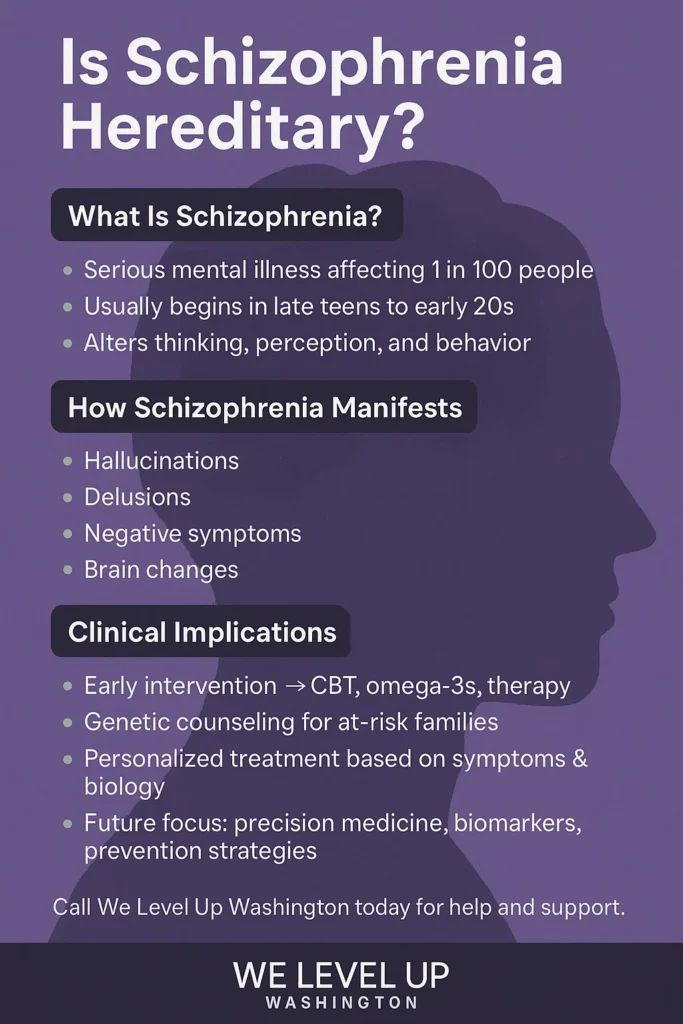
The causes of Schizophrenia are numerous. It usually happens when genes, brain changes, and life events co-occur.
Genetic Factors
Your risk is increased if you have a family member with Schizophrenia. However, it is not solely caused by genes.
Structure and Chemistry of the Brain
Mental health professionals say that people with Schizophrenia often have slight changes in their brains compared to healthy people. There may be more minor parts of the brain that control remembering and planning. Dopamine and glutamate are two chemicals in the brain that might not work right. These changes can cause people to have hallucinations or think jumbled thoughts.
Environmental Factors
Some events in a person’s life can trigger symptoms even if they have a genetic risk. These events may be:
- Problems during pregnancy or birth, such as low oxygen or infection.
- Trauma or abuse as a child.
- Stressful life events, such as the loss of loved ones or divorce.
- Use of drugs, mostly weed, cocaine, or LSD.
Genes & Environment Link
Neither genes nor the surroundings can work alone. The way genes work can be changed by stress, pain, or toxins. Epigenetics is the name for this process.
It has the power to turn “on” or “off” the risk of Schizophrenia. Schizophrenia can happen to people who have a high genetic risk. It occurs when they are teenagers and use drugs or are under a lot of stress.
End the Emotional Pain. Get Your Life Back.
Feeling Depressed, Anxious or Struggling with Mental Health Illness? Get Safe Comfortable Mental Health Dual Diagnosis High-Quality Therapy From Counselors That Care. Begin Your Recovery Now.
Hotline: (509) 348-4077

Early Warning Signs
Before the signs get worse or more confusing, families can get help if they can spot them early. Having trouble focusing, pulling away from other people, and talking in ways that don’t make sense are all signs. Strong views that other people don’t understand or hearing sounds that aren’t there are also signs. Families learn these signs so they can get help before the problems get worse.
Schizophrenia Spectrum
There are a number of linked illnesses on the schizophrenia spectrum that change the way a person thinks, feels, and interacts with the world. Some people may hear voices for a long time, which can make even ordinary everyday tasks feel hard or unpleasant if they don’t get the help they need.
Types of schizophrenia spectrum disorders
- Schizoaffective disorder: Similar to schizophrenia characterized by significant mood episodes (major depressive disorder or bipolar disorder).
- Schizophreniform disorder: Similar to schizophrenia, however the symptoms last for a shorter time (more than a month but less than six months).
- Schizotypal personality disorder: It is similar to schizophrenia, although the episodes are not as common, long-lasting, or severe. People can typically tell the difference between their distortedthoughts and experiences.
People may have negative symptoms, such as a lack of drive, reduced emotional responsiveness, or difficulty starting daily tasks. A family may not notice these signs at first, but getting help quickly can make a big difference.

How We Level Up: Washington Approaches Treatment
At We Level Up, WA, in Spokane Valley, we give:
- Personalized treatment plans
- Therapies like CBT and DBT
- Group Therapy
- Dual diagnosis programs
Get Help. Get Better. Get Your Life Back.
Searching for Accredited Dual Diagnosis Mental Health Centers Near You?
Even if therapy failed previously, or are in the middle of a difficult crisis, we stand ready to support you. Our trusted behavioral health specialists will not give up on you. When you feel ready or just want someone to speak to about counseling alternatives to change your life call us. Even if we cannot assist you, we will lead you to wherever you can get support. There is no obligation. Call our hotline today.
FREE 24/7 Dual Diagnosis Mental Health Services Hotline
Diagnosis
The Diagnostic and Statistical Manual of Mental Disorders is used to figure out if a person has Schizophrenia. They look for symptoms that persist for at least 6 months.
- Talking about symptoms and medical history.
- Brain scans or blood tests are used to rule out other potential causes.
Treatment and Support
Getting treatment can help ease symptoms and make daily life better. Everyone can get help in the form of medicine, therapy, and support.
Medication
Antipsychotic drugs help balance brain chemicals. Doctors may adjust drug doses to reduce side effects.
Therapy
Therapies such as CBT and DBT help folks manage their thoughts and emotions.
Family Support
Family members can play an essential role in helping a person recover. They can do so by learning about Schizophrenia and being there for them emotionally.
Healthy Habits
Treatment can work better if you get enough sleep, eat well, exercise, and don’t drink alcohol or do drugs.
Comfortable Facilities & Amenities
High-Quality Mental Health Services & Behaviroal Health Substance Abuse Treatment
Rehab Centers TourRenowned Mental Health Centers. Serene Private Facilities. Inpatient Rehab Programs Vary.
Mental Health Helpline: (509) 348-4077Proven recovery success experience, backed by a Team w/ History of:
15+
Years of Unified Experience
100s
5-Star Reviews Across Our Centers
10K
Recovery Success Stories Across Our Network
- Low Patient to Therapist Ratio
- Comprehensive Dual-Diagnosis Treatment
- Complimentary Family & Alumni Programs
- Coaching, Recovery & Development Events
- Comfortable Onsite Medical Detox Center

Frequently Asked Questions (FAQs)
-
What are the primary forms of schizophrenia disorder?
Paranoid, catatonic, disorganized, residual, are the main types. Each has its own signs and problems.
-
Is Schizophrenia genetic?
Researchers have found DNA links to Schizophrenia. This means that some people may be more likely to get it if they have a family history of it.
-
Is Schizophrenia hereditary?
Yes, genetic factors can make someone more likely to get Schizophrenia, but having a family member with it doesn’t mean someone else will get it too.
-
What causes Schizophrenia?
Experts think that the condition is caused by a mix of genes, brain chemistry, trauma, and stress in the surroundings.
-
Can stress increase the causes of schizophrenia symptoms?
People who already have genetic or biological risk factors may feel their symptoms get worse when they are stressed.
-
Can young adults develop Schizophrenia?
Yes, signs usually show up in late teens or early adulthood, but getting help early can make things much better.
-
Can people with Schizophrenia live stable lives?
Many people can manage their symptoms and live productive lives with proper treatment, medication, and support.
-
Does We Level Up Washington treat all forms of schizophrenia disorder?
Yes, our team helps with all of them by providing each person with unique, evidence-based care tailored to their needs.
Related Readings
External Resources:
Mental Health UK: Types of Schizophrenia
WebMD: Types of Schizophrenia Spectrum Disorders
Internal Resources:
World-class, Accredited, 5-Star Reviewed, Effective Mental Health Dual Diagnosis Programs. Complete Integrated Inpatient Rehab with Free Post Discharge Therapy Planning.
Hotline: (509) 348-4077End the Emotional Pain Rollercoaster. Gain Stability & Happiness Through Recovery Treatment. Start Mental Health Counseling Today. Get Free No-obligation Guidance by Behaviroal Health Specialists Who Understand Mental Health Recovery.
Final Thoughts
If you or someone you love is struggling with Schizophrenia, you do not have to face it alone. At We Level Up Washington, our team is ready to guide you with compassion, skill, and evidence-based care. We help clients understand symptoms, build coping tools, and discover new hope for a stable future.
Whether you need crisis support, treatment planning, or guidance on next steps, we are here around the clock to help. Call us today at (509) 348-4077 to begin your journey.