

How Long Do Manic Episodes Last? Support in Spokane Valley
How Long Do Manic Episodes Last? Mania and hypomania can last for different amounts of time, depending on the type of bipolar disorder and the person. But some general rules can be used as a guide.
Clinically Reviewed by Lauren Barry, LMFT, MCAP, QS
Medically Reviewed by Ali Nikbakht, PsyD
Updated on June 5, 2026 — Editorial Policy | Research Policy

You might be thinking, “How long do manic episodes last?” if you or someone you care about has bipolar disorder and has big, crazy mood swings. Whether it’s the crazy highs of manic episodes or the bad behavior that follows, getting clear answers is the first thing that needs to be done to get stable.
To help you navigate this journey, let’s discuss this mental health issue in a clear and caring manner and how you can find support at We Level Up Washington.
Skip To
Table of Contents
What Is a Manic Episode?
An episode of mania is like a surge of energy that can feel exciting but often spirals into chaos. People with bipolar disorder, especially bipolar I, usually have mood swings that get in the way of their daily lives. These mood swings can be very positive or very negative. Understanding what’s happening is the first step to managing it, so let’s break it down.
Manic Episode Definition
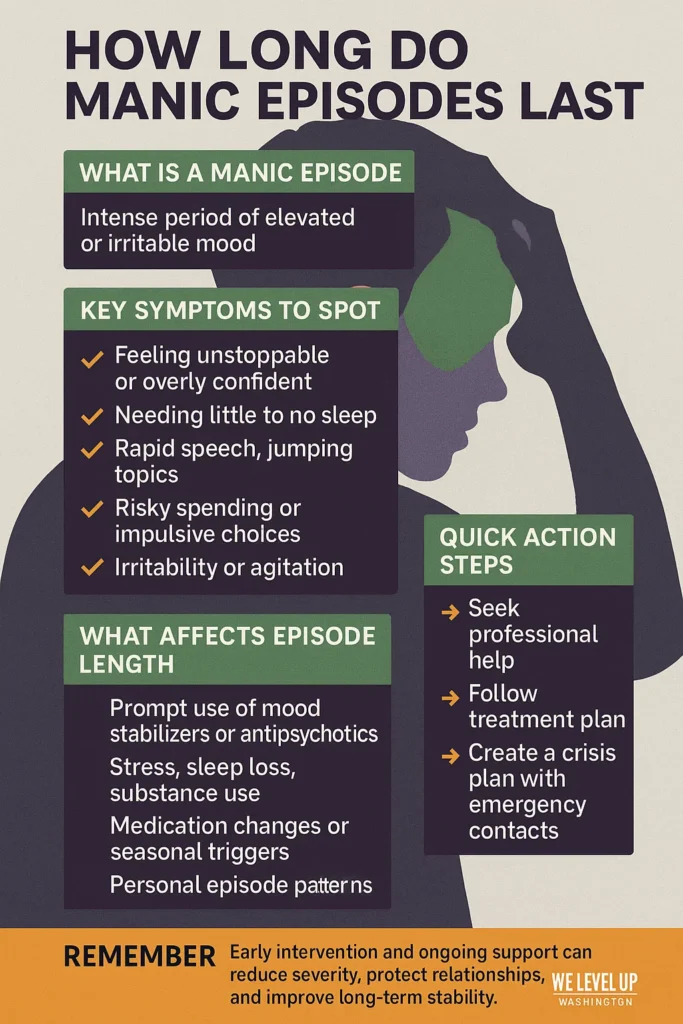
A manic or a hypomanic episode is a medical condition:
- A period of an abnormally elevated mood (sometimes shows up as irritability)
- Lasts at least once a week
- Includes increased energy and activity
Being joyful or energetic is not the only aspect of manic episodes. They make you feel strong. This can lead to quick actions or spending without thinking. It can also cause risky behavior. Mania or hypomania signs might not seem like a problem to you or a loved one at the time.
Recognizing Manic Episode Symptoms
Spotting manic episode symptoms early can help you or your loved one get help sooner. Here’s what to look for:
- Feeling unstoppable, overly confident, or even invincible.
- Doing minimal rest and decreased need for sleep.
- Racing thoughts that are so fast that it becomes challenging to hold.
- Babbling, frequently changing subjects.
- Acting impulsively, such as making significant financial purchases or taking substantial risks.
- Feeling irritable or agitated, even over small things.
End the Emotional Pain. Get Your Life Back.
Feeling Depressed, Anxious or Struggling with Mental Health Illness? Get Safe Comfortable Mental Health Dual Diagnosis High-Quality Therapy From Counselors That Care. Begin Your Recovery Now.
Hotline: (509) 348-4077

How Long Do Manic Episodes Last?
There is no one answer to the question of how long do manic episodes last, but let’s look at what studies and experts say to get a better idea.
Typical Duration of a Manic Episode
For a bipolar manic episode, the DSM-5 says symptoms must last at least one week. This is true unless treatment or hospitalization interrupts it. Without intervention, these episodes can stretch from several weeks to several months. Here’s a closer look at different types of bipolar disorder:
- Bipolar I Disorder: If not treated, manic episodes might last anywhere from one to three months.
- Bipolar II Disorder: Hypomanic episodes, which are less intense, typically last 4 to 7 days but can recur without proper management.
- Mixed Episodes: These mixed episodes can last as long as typical manic episodes, often one to two weeks.
What Affects the Length of an Episode?
Several factors influence how long a manic episode lasts:
- Treatment Access: Mood stabilizers can make episodes a lot shorter.
- Triggers: Stress, lack of sleep, or substance use can extend the duration.
- Personal History: If you’ve had episodes before, their patterns might repeat.
- Support System: Having family, friends, or professionals involved can help get help faster.
If you have questions about a specific episode, you can ask a mental health professional. They can provide advice that fits your situation.
Get Help. Get Better. Get Your Life Back.
Searching for Accredited Dual Diagnosis Mental Health Centers Near You?
Even if therapy failed previously, or are in the middle of a difficult crisis, we stand ready to support you. Our trusted behavioral health specialists will not give up on you. When you feel ready or just want someone to speak to about counseling alternatives to change your life call us. Even if we cannot assist you, we will lead you to wherever you can get support. There is no obligation. Call our hotline today.
FREE 24/7 Dual Diagnosis Mental Health Services HotlineWhat Causes Manic Episodes?
Seasonal Shifts: Some people notice changes in their mood with the seasons, like spring or winter.
Stressful Events: A breakup or losing a job, for example, can cause an episode.
Sleep Disruption: Staying up too late or having irregular sleep can make symptoms worse.
Substance Use: Alcohol, recreational drugs, and too much caffeine can upset your mood.
Medication Changes: Changing or skipping medications without a doctor’s advice can cause mania.
How to Handle a Manic Episode
It can feel like you are in a whirlwind when you are manic. Follow these steps to plan care that will help you or a loved one get back on track.
Seek Professional Support
There are people who can help you when things are hard. In terms of health problems, they might say the following:
- Medications: Mood stabilizers, like lithium, or antipsychotics, can help you keep your mood in check. These medicines may cause side effects in some people.
- Therapy: Talk therapy and cognitive-behavioral therapy (CBT) can help you learn how to deal with things. They can also make talking to each other better.
- Inpatient Care: If the signs are ominous, you may need to stay in the hospital for a short time to be safe.
Lean on Your Support Network
Surround yourself with people who care about your feelings. Friends, family, or a local support group can help you. Think about joining a bipolar support group in Spokane Valley or online. This way, you can connect with others who understand.
Why Choose We Level Up?
We Level Up Washington understands how tough it is to live with bipolar disorder and deal with manic depression. We believe that everyone with bipolar disorder can have a good life. With the right help and support, recovery is possible and within reach.
Our team has a lot of experience helping clients with mania and depression. We create treatment plans that are unique for each client. Our focus is on stability and long-term recovery.
Comfortable Facilities & Amenities
High-Quality Mental Health Services & Behaviroal Health Substance Abuse Treatment
Rehab Centers TourRenowned Mental Health Centers. Serene Private Facilities. Inpatient Rehab Programs Vary.
Mental Health Helpline: (509) 348-4077Proven recovery success experience, backed by a Team w/ History of:
15+
Years of Unified Experience
100s
5-Star Reviews Across Our Centers
10K
Recovery Success Stories Across Our Network
- Low Patient to Therapist Ratio
- Comprehensive Dual-Diagnosis Treatment
- Complimentary Family & Alumni Programs
- Coaching, Recovery & Development Events
- Comfortable Onsite Medical Detox Center
Frequently Asked Questions (FAQs)
-
Where in Spokane Valley, Washington, can you find treatment for manic episodes?
In Spokane Valley, We Level Up provides programs for bipolar disorder. We offer therapy and help with medication. Contact us to schedule a consultation and start your healing journey.
-
Can I live an everyday life with bipolar disorder?
Yes, definitely. With the proper care and lifestyle choices, many people with bipolar disorder can live happy, successful lives.
-
Can manic episodes be dangerous?
Yes, sometimes. People who are manic might drive too fast, spend too much money, or use drugs. That’s why it’s essential to get help and treatment quickly.
-
What treatments help with manic episodes?
Treatment may include mood stabilizers, antipsychotic medications, and therapy such as CBT.
-
Can manic episodes be dangerous?
Yes, sometimes. People in mania may take significant risks. They might drive fast, spend too much money, or use drugs. That’s why it’s important to get treatment and support quickly.
-
What causes manic episodes?
Manic episodes can be caused by stress, not getting enough sleep, missing medications, or using drugs or alcohol. They can also occur after major life changes. Sometimes, they happen for no clear reason.
-
How can I tell if someone is having a manic episode?
They may talk fast, sleep little, make risky choices, or act very happy or very angry. They might also have racing thoughts or feel like they can do anything.
-
How long do manic episodes last?
In the absence of treatment, most manic periods last between one and three months. They can end faster if they get the right medicine and treatment.
Final Thoughts
If manic episodes are impacting your daily life or lasting a long time, you deserve real support and help. At We Level Up Washington, our caring team knows how tough bipolar symptoms can be. We are here to help you find stability, safety, and long-term healing.
Call today to speak with our team and learn more about our programs. We Level Up Washington: (509) 348-4077. Your next step starts here.
Medical Sources:
- https://westwindrecovery.com/recovery-blog/how-long-can-a-manic-episode-last/
- https://www.medicalnewstoday.com/articles/how-long-do-bipolar-episodes-last#
- https://www.verywellmind.com/bipolar-disorder-how-often-do-people-cycle-378814
- https://my.clevelandclinic.org/health/diseases/21603-mania