
Dual Diagnosis Treatment Program in Washington
Understand what dual diagnosis is and how to find the right dual diagnosis treatment in Washington. Reach out to We Level Up Washington and start your journey to a healthier, happier, and more fulfilled life. We are there to support you!
Clinically Reviewed by Lauren Barry, LMFT, MCAP, QS
Medically Reviewed by Ali Nikbakht, PsyD
Updated on June 8, 2026 — Editorial Policy | Research Policy
Dual Diagnosis Treatment Program
Struggling with both addiction and mental health issues creates a complex cycle. This cycle requires a specialized dual diagnosis treatment program. Many people feel overwhelmed when depression or anxiety fuels their substance use. It makes recovery seem impossible alone. You might drink to stop the sad feelings. You might take pills to calm your worry. This combined burden often leads to hopelessness. However, effective professional help is available. We Level Up Washington understands these unique challenges. We provide the compassionate support needed to break this cycle. You do not have to choose between treating your mind or your addiction. We address both simultaneously.
Skip To
Table of Contents
Understanding the Connection
To understand dual diagnosis, you must look at how the brain works. Your mental health and your substance use are linked. They feed off each other. This is often called a “co-occurring disorder.”
Imagine you feel anxious all the time. Your chest feels tight, and your mind races. You discover that alcohol makes the racing thoughts stop for a few hours. So, you drink. This works for a little while. But then the alcohol wears off. The anxiety comes back worse than before. So, you drink more. Soon, you are trapped.
The alcohol changes your brain chemistry. It makes the anxiety worse in the long run. Now, you have two problems. You have the original anxiety, and you have an addiction to alcohol. This is a classic dual diagnosis. You cannot fix one without fixing the other.
If you stop drinking but ignore the anxiety, the anxiety will drive you back to the bottle. If you treat the anxiety but keep drinking, the therapy won’t work. You need a solution that targets both problems at once.
What Is a Dual Diagnosis Treatment Program?
A dual diagnosis treatment program provides specialized care. It helps individuals face substance abuse and mental health disorders together. It focuses on treating both conditions at the same time. We do not address them separately or one after the other.
Co-occurring disorder care ensures that we resolve the root causes of addiction. These causes often include trauma, depression, or severe stress. This integrated approach helps patients achieve lasting stability. It prevents relapse by healing the whole person effectively.
Professional treatment is essential. Untreated mental health issues often drive individuals back to substance use for relief. Without integrated mental health and addiction treatment, the cycle of dependency disrupts lives. It ruins relationships.
Medical experts provide the necessary tools. We use medications to manage symptoms safely. We promote long-term emotional balance. Attempting to manage these complex conditions alone is dangerous. It is rarely successful without expert guidance.
End the Emotional Pain. Get Your Life Back.
Feeling Depressed, Anxious or Struggling with Mental Health Illness? Get Safe Comfortable Mental Health Dual Diagnosis High-Quality Therapy From Counselors That Care. Begin Your Recovery Now.
Hotline: (509) 348-4077

The Scope of the Problem
You are not alone in this struggle. The Substance Abuse and Mental Health Services Administration (SAMHSA) states a startling fact. Approximately 9.2 million adults in the United States have a co-occurring disorder. This statistic highlights a critical need. Communities across the nation need accessible dual diagnosis treatment program options.
Many people suffer in silence. They think they are just “weak” or “crazy.” They do not realize they have a treatable medical condition. Recognizing that you are not alone is a vital first step. Seeking help is a sign of strength, not weakness. Comprehensive care offers the best chance for a healthy life. You can live free from the weight of these disorders.
Common Co-Occurring Disorders
We see many combinations of mental health and addiction issues. Here are some common ones we treat:
Depression and Alcohol: People often drink to numb the pain of depression. But alcohol is a depressant. It actually lowers the brain’s mood chemicals over time. This creates a downward spiral of sadness and drinking.
Anxiety and Benzodiazepines: People take drugs like Xanax or Valium to stop panic attacks. These drugs are highly addictive. The body builds a tolerance quickly. Soon, you need the drug just to feel normal, not calm.
PTSD and Opioids: Trauma survivors often have physical and emotional pain. They might use painkillers or heroin to block out bad memories. This numbs the feelings, but it prevents the trauma from healing.
Bipolar Disorder and Stimulants: People with bipolar disorder might use cocaine or meth during a depressive phase to feel energy. Or they might use alcohol during a manic phase to slow down. This makes the mood swings even more extreme.
Get Help. Get Better. Get Your Life Back.
Searching for Accredited Dual Diagnosis Mental Health Centers Near You?
Even if therapy failed previously, or are in the middle of a difficult crisis, we stand ready to support you. Our trusted behavioral health specialists will not give up on you. When you feel ready or just want someone to speak to about counseling alternatives to change your life call us. Even if we cannot assist you, we will lead you to wherever you can get support. There is no obligation. Call our hotline today.
FREE 24/7 Dual Diagnosis Mental Health Services HotlineSigns You May Need a Dual Diagnosis Treatment Program
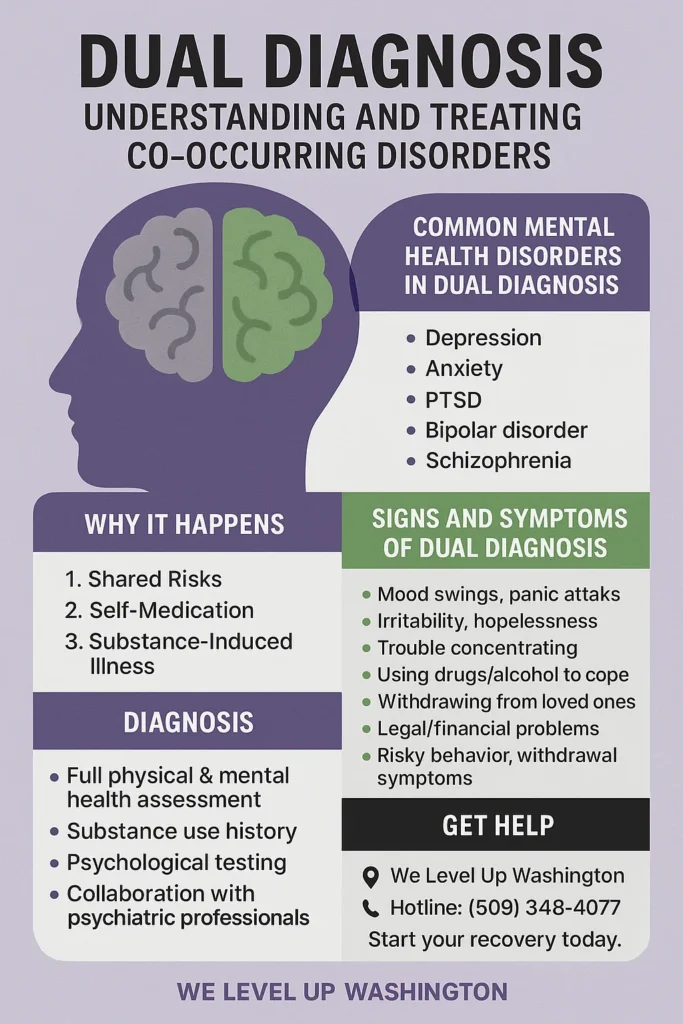
It can be hard to tell if you have a dual diagnosis. The symptoms often overlap. However, look for these warning signs in yourself or a loved one:
Family History: You have a family history of both mental illness and addiction. These traits often run in families.
Using to Cope: You use substances specifically to stop intense sadness, fear, or anger. You treat drugs like medicine for your feelings.
Extreme Mood Swings: Your mood shifts wildly. These shifts affect your daily relationships with family. You might go from rage to tears in minutes.
Functional Decline: You cannot maintain a job. You fail classes at school. You struggle to complete basic daily tasks.
Social Withdrawal: You pull away from friends and family. You isolate yourself completely. You only want to be alone with your substance.
Baseline Anxiety: You experience severe anxiety even when you are not using drugs. The worry never goes away.
Failed Attempts to Quit: You try to stop using, but the emotional pain becomes too much. You relapse just to stop the mental anguish.
Hopelessness: You feel constantly hopeless about the future. You feel like nothing will ever get better.
Why Choose We Level Up Washington?
We Level Up Washington offers a premier dual diagnosis treatment program. We prioritize your comprehensive recovery and well-being. Our facility is not just a rehab; it is a healing center.
Expert Staff: We staff our facility with dual-licensed clinicians. They are experts in both addiction medicine and behavioral health treatment. They understand the complex interplay between the mind and drugs. They know how to adjust medication safely. They know how to talk you through a panic attack without judgment.
Safe Environment: We provide a nurturing environment. Here, you can explore the underlying causes of your struggles. You can talk about your trauma safely. We remove the triggers of the outside world. You can focus entirely on getting better.
Holistic Approach: Our approach to dual diagnosis support integrates evidence-based therapies. We also use holistic healing practices. We use yoga, art therapy, and mindfulness. We understand that mental health and addiction connect deeply. A synchronized treatment strategy works best. By addressing both issues at once, we help you build a stronger foundation.
Commitment to Excellence: Our commitment ensures you receive the highest standard of care. We stay up-to-date on the latest research. We constantly improve our programs. Choosing us means joining a community dedicated to your success.
Comfortable Facilities & Amenities
High-Quality Mental Health Services & Behaviroal Health Substance Abuse Treatment
Rehab Centers TourRenowned Mental Health Centers. Serene Private Facilities. Inpatient Rehab Programs Vary.
Mental Health Helpline: (509) 348-4077Proven recovery success experience, backed by a Team w/ History of:
15+
Years of Unified Experience
100s
5-Star Reviews Across Our Centers
10K
Recovery Success Stories Across Our Network
- Low Patient to Therapist Ratio
- Comprehensive Dual-Diagnosis Treatment
- Complimentary Family & Alumni Programs
- Coaching, Recovery & Development Events
- Comfortable Onsite Medical Detox Center
What to Expect During the Program
Fear of the unknown keeps many people away from treatment. Here is a step-by-step look at what happens in our program.
Step 1: Comprehensive Assessment Your journey begins with a detailed check-up. We customize your dual diagnosis treatment program specifically for you. Medical professionals evaluate your physical health. They check your mental status. They look at your substance use history. This initial step is crucial. We must identify all co-occurring disorder care needs before therapy starts. You will feel heard and understood. We map out the path to your personal recovery together.
Step 2: Detox and Stabilization If you are currently using substances, you might need detox. We manage this medically. We keep you safe while the drugs leave your body. At the same time, we stabilize your mental health. We might start you on non-addictive medications to help with mood or anxiety. This clears the fog so therapy can work.
Step 3: Integrated Therapy You will engage in intensive therapy sessions. These sessions treat integrated mental health and addiction treatment issues.
- Cognitive-Behavioral Therapy (CBT): This helps you recognize negative thought patterns. You learn how thoughts affect feelings. You learn to change those thoughts.
- Dialectical Behavior Therapy (DBT): This is excellent for dual diagnosis. It teaches you how to tolerate distress. You learn to regulate your emotions. You learn mindfulness.
- Trauma Therapy: If past trauma drives your addiction, we address it. We help you process painful memories safely.
Step 4: Group Support Group sessions provide a supportive space. You share experiences with peers. You learn from others facing similar life challenges. You realize you are not “crazy.” You see that others struggle with the same thoughts. This reduces shame. It builds a sense of belonging.
Step 5: Life Skills Training We teach you practical skills. You learn how to manage a budget. You learn how to communicate your needs. You learn how to handle conflict without drugs. We prepare you for the real world.
The Role of Medication
Medication often plays a key role in dual diagnosis treatment. It is not a crutch; it is a tool.
If you have a chemical imbalance in your brain, therapy alone might not be enough. Antidepressants can lift the dark cloud of depression. Mood stabilizers can prevent the highs and lows of bipolar disorder. Anti-anxiety medication can stop panic attacks.
Our doctors manage these medications carefully. We avoid addictive substances like benzos or stimulants whenever possible. We find safe, effective alternatives. When your brain chemistry is balanced, you can focus on therapy. You can learn and grow.
Relapse Prevention Strategies
Relapse prevention is a key component of our program. We prepare you for the future. We know that stress will happen. We know that sadness will happen.
We teach practical strategies to manage mental health symptoms. You learn to spot the early warning signs of a mental health dip. You learn what to do when you feel a craving. You create a “safety plan.” This plan lists who to call and what to do in a crisis.
Your discharge plan includes connections to local resources. We connect you with behavioral health treatment providers. We find support groups in your community. We ensure you leave our facility feeling empowered.

Benefits of a Dual Diagnosis Treatment Program
Choosing an integrated program offers unique benefits over standard rehab.
- Complete Healing: We treat the root cause, not just the symptom. This leads to deeper healing.
- Reduced Relapse Risk: When you manage your mental health, you have less need to self-medicate. This significantly lowers the risk of relapse.
- Emotional Stability: You learn to regulate your moods. You feel more stable and calm on a daily basis.
- Better Relationships: As you heal, your relationships improve. You can communicate better with family and friends.
- Life Skills: You develop healthy coping skills for stress. You handle life’s challenges with confidence.
- Peer Network: You gain access to a supportive network of peers who understand your specific struggle.
Family Involvement
Addiction and mental illness affect the whole family. We encourage family involvement in treatment.
We offer family therapy sessions. We educate your loved ones about your condition. We teach them that it is a disease, not a choice. We help them understand your triggers. We teach them how to support you without enabling you.
Repairing these relationships is vital. A strong family support system boosts your chances of long-term success. We help you rebuild trust and love.
Aftercare and Alumni Support
Recovery is a lifelong journey. It does not end when you walk out our doors. We offer robust aftercare planning.
We connect you with alumni networks. You stay connected to the friends you made in rehab. We offer ongoing support groups. We check in on you. We want to ensure you navigate life confidentially. We are here for the long haul.
How to Get Started
Taking the first step toward a dual diagnosis treatment program is a courageous decision. It is the most important choice you will ever make for your future.
You do not have to navigate the complexities of addiction and mental health alone another day. Help is available right now. Contact our admissions team. Discuss your situation with us. We listen with empathy. We verify your insurance coverage for our specialized services. We explain the costs clearly.
We are available around the clock to answer your questions. We can schedule a confidential consultation immediately. Your recovery journey starts with a simple phone call. We are here to support you fully.
Frequently Asked Questions (FAQs)
-
What exactly is a dual diagnosis treatment program?
A dual diagnosis treatment program treats addiction and mental health disorders simultaneously. It recognizes that these conditions feed into each other. If you ignore one, the other gets worse. Leaving one untreated usually leads to relapse. This integrated approach is essential for long-term recovery success. We provide the comprehensive care needed to heal both the mind and body at the same time.
-
Which condition typically develops first in patients?
It is often difficult to determine which condition appeared first. They influence each other significantly over time. sometimes drug use causes mental health issues. For example, meth use can cause paranoia. Other times, mental illness leads to self-medication. A depressed person might drink to feel happy. This is the “chicken or the egg” question. Regardless of the order, professional treatment focuses on resolving both. Our team evaluates your history to understand your specific needs.
-
How does this differ from standard rehab?
Standard rehab often focuses solely on addiction. They might tell you to “just stop using.” A dual diagnosis treatment program integrates mental health care. We provide therapy for conditions like depression or anxiety alongside substance abuse treatment. Ignoring the mental health component leaves you vulnerable. You might leave rehab clean, but if the anxiety remains, you will likely use again. Our specialized approach ensures all aspects of your well-being are treated.
-
Is medication used during the treatment process?
Yes, medication is often a vital tool. Doctors may prescribe antidepressants or anti-anxiety medications. These stabilize your mood and reduce cravings. Medication management is carefully monitored. We ensure safety and find the best regimen for your body. We avoid giving you new addictions. We work to restore chemical balance while you learn coping skills.
-
How long does the treatment program last?
The length varies depending on the severity of your condition. Most patients benefit from a stay of thirty to ninety days. Dual diagnosis cases are complex. It takes time to find the right medication balance. It takes time to learn new thinking patterns. Longer treatment times allow for deeper healing. We work with you to determine the optimal timeline for your personal journey.
-
Can my family be involved in treatment?
Yes, family involvement is highly encouraged. It helps repair relationships. It builds a strong support system. We offer family therapy sessions. We educate loved ones about your condition. Understanding the challenges of dual diagnosis helps family members provide the right environment. Strong family connections act as a powerful motivator for maintaining sobriety.
-
Does insurance cover dual diagnosis treatment costs?
Most major insurance providers recognize the importance of treating co-occurring disorders. They cover these essential medical services. We Level Up Washington accepts a wide range of insurance plans. We help minimize your out-of-pocket expenses. Our admissions team verifies your benefits quickly. We explain your coverage options clearly. You should not let financial concerns prevent you from accessing life-saving care.
-
What support is available after discharge?
Aftercare is a critical part of recovery. We ensure you have continued support as you transition home. We connect you with outpatient therapists. We find psychiatrists who understand addiction. We connect you with support groups and alumni networks. You will leave with a solid relapse prevention plan. This plan is tailored to your specific triggers. We are committed to your long-term success.
-
What if I have tried rehab before and failed?
This is very common for people with dual diagnosis. If previous rehabs did not treat your mental health, they missed half the problem. That is likely why it didn’t work. Do not give up hope. Our integrated approach is different. By treating the whole person, we give you a much better chance at success.
-
Is the environment safe for someone with PTSD?
Yes. We understand trauma. We create a trauma-informed environment. This means we are careful not to re-traumatize you. Our staff is trained to handle PTSD symptoms. We create a space of safety and trust.
Ready to Reclaim Your Life?
You do not have to let the weight of addiction and mental illness control your life anymore. The cycle can be broken. We Level Up Washington is ready to help you reclaim your health. We help you find your inner peace.
Our compassionate team understands your struggles. We offer the expert dual diagnosis treatment program you need. We provide a safe, supportive environment. Here, you focus entirely on your physical and mental recovery.
Reach out to us today. Learn more about our comprehensive treatment programs. Call us now to verify your insurance. Take the first step toward a healthier, brighter tomorrow. We Level Up Washington is here to guide you through every stage. Our dedicated staff waits to welcome you. Your well-being is our priority. We are committed to helping you heal fully. Contact us immediately. Begin the path to a brighter future with our help.
World-class, Accredited, 5-Star Reviewed, Effective Mental Health Dual Diagnosis Programs. Complete Integrated Inpatient Rehab with Free Post Discharge Therapy Planning.
Hotline: (509) 348-4077End the Emotional Pain Rollercoaster. Gain Stability & Happiness Through Recovery Treatment. Start Mental Health Counseling Today. Get Free No-obligation Guidance by Behaviroal Health Specialists Who Understand Mental Health Recovery.