

Is ADHD Considered a Mental Illness? Treatment & Support
Is ADHD a mental illness, disability, or both? ADHD (Attention-Deficit/Hyperactivity Disorder) is not a mental illness in the traditional sense.
Clinically Reviewed by Lauren Barry, LMFT, MCAP, QS
Medically Reviewed by Ali Nikbakht, PsyD
Updated on January 10, 2026 — Editorial Policy | Research Policy

Many people ask is ADHD considered a mental illness especially when symptoms begin affecting daily life. ADHD can impact focus, behavior, and emotions in ways that feel stressful or confusing. Families may struggle to understand how ADHD works and what support is needed.
Our team at We Level Up Washington helps clients learn about ADHD, build coping skills, and feel more confident.
Skip To
Table of Contents
What Is ADHD?
ADHD stands for Attention-Deficit/Hyperactivity Disorder, which affects how a person pays attention and controls actions. People with ADHD may feel restless or distracted during simple tasks that others find easy. Some may act quickly without thinking, which can make daily life feel difficult. ADHD is manageable with the proper support, tools, and treatment plan.
Is ADHD considered a Mental illness?
Many families want to know is ADHD a mental illness especially when symptoms cause stress at home or school. ADHD is a neurodevelopmental disorder, which means it begins early in brain development. Because ADHD affects thinking and behavior, it falls under the mental health category. Even so, ADHD is different from mood disorders and needs specialized treatment.
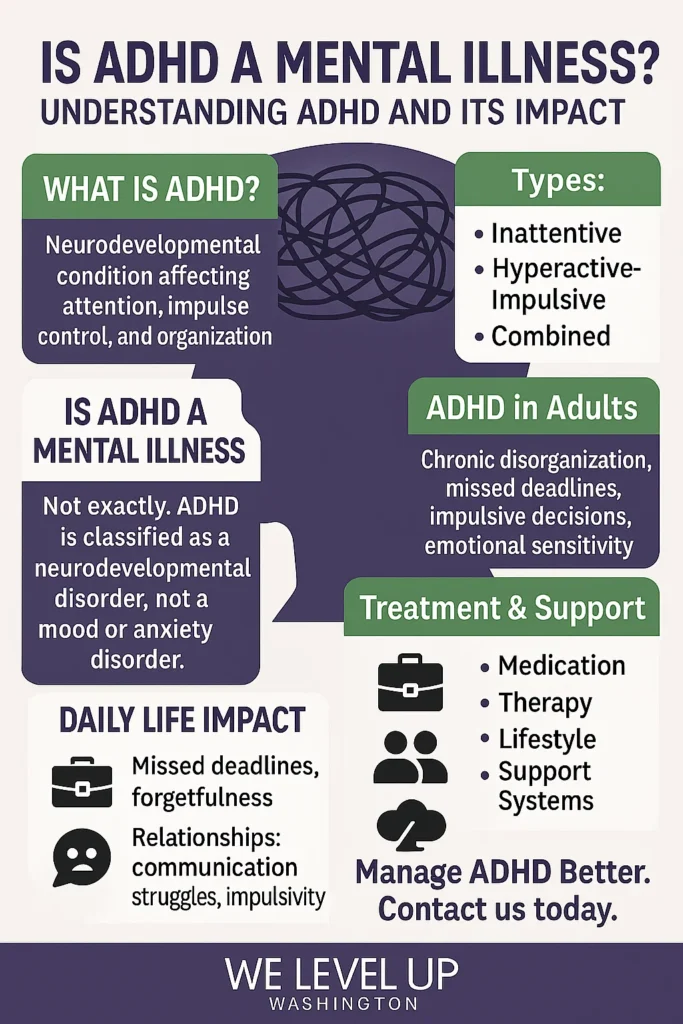
ADHD as a Disability and Mental Health Condition
People often wonder whether ADHD also applies to legal disability programs. ADHD can be a disability when symptoms make school, work, or daily tasks very hard to manage. This leads to questions like Is ADHD a disability or mental illness when families seek support. The answer depends on how much symptoms affect functioning in real-life situations.
ADHD in Adults
Many people ask is ADHD a mental illness in adults is a mental illness or not. Because adult symptoms can look different from childhood symptoms. Adults may struggle with time management, emotional control, or staying organized during the day. These challenges can create stress at home, work, or in relationships. With treatment, adults learn skills that help them stay focused, calm, and productive.
ADHD and Learning Challenges
Some people wonder is ADHD a learning disability or mental illness, because ADHD affects school performance. ADHD doesn’t make it hard to learn, but it can make it difficult when you can’t focus. Trouble completing tasks or listening closely can make school challenging. The proper support helps students stay organized and learn more effectively.
What Causes ADHD?
ADHD is caused by a mix of genetics, life events, and the way the brain works. Researchers have found that ADHD often runs in families. This means that genes may play a part. Differences in brain growth also make it hard for many clients to pay attention and control their impulses. Symptoms can also be affected by stress, experiences in early life, and the environment.

ADHD Symptoms
Symptoms of ADHD can be inattentive, restless, or a mix of the two. These symptoms make daily life difficult. Some people are easily sidetracked and find it hard to finish things without reminders. Some people get antsy or have trouble staying still when they’re doing something quiet. Therapy, structure, and good habits can help with symptoms.
ADHD Diagnosis at We Level Up Washington
Our team uses trusted tools to identify ADHD symptoms and create clear treatment plans. Clients talk with skilled clinicians who understand how ADHD affects thinking, behavior, and mood. A complete evaluation helps us understand strengths, struggles, and needs. This process leads to a personalized plan that supports long-term progress.
Treatment options for ADHD
Everyone gets a plan tailored to them based on their symptoms and goals. Plans include therapy, learning new skills, and healthy habits that help people grow every day. The steps we take are easy, but they give us order and help us concentrate. During every step of treatment, our team is there to help.
Therapies for ADHD
Both CBT and DBT help people understand their thoughts, deal with their feelings, and feel less stressed. These treatments teach people to focus, be patient, and solve problems more effectively in their daily lives. Clients work on these skills over time to make their routines better. Therapy makes people feel better by making them calmer, more confident, and more organized.
End the Emotional Pain. Get Your Life Back.
Feeling Depressed, Anxious or Struggling with Mental Health Illness? Get Safe Comfortable Mental Health Dual Diagnosis High-Quality Therapy From Counselors That Care. Begin Your Recovery Now.
Hotline: (509) 348-4077

Medication
ADHD medications help people focus and reduce restlessness. Our doctors and nurses help you pick the right medicine and make sure it’s taken correctly. When used with therapy and life-skills training, medication works best. This fair method makes clients feel like they have more control.
Family Support
Parents and kids learn how ADHD changes behavior and feelings in everyday life. Education helps families respond with patience, support, and structure. These tools help people talk to each other better and avoid arguments at home. Long term, things will go better if you have strong family support.
Get Help. Get Better. Get Your Life Back.
Searching for Accredited Dual Diagnosis Mental Health Centers Near You?
Even if therapy failed previously, or are in the middle of a difficult crisis, we stand ready to support you. Our trusted behavioral health specialists will not give up on you. When you feel ready or just want someone to speak to about counseling alternatives to change your life call us. Even if we cannot assist you, we will lead you to wherever you can get support. There is no obligation. Call our hotline today.
FREE 24/7 Dual Diagnosis Mental Health Services HotlineHealthy Habits and Life Skills
Having healthy routines every day helps with ADHD symptoms. The brain and body are both helped by getting enough sleep, eating well, and working out regularly. Setting up a routine every day helps clients stay on track and keep going. These habits make you feel more stable and confident.
Dual Diagnosis Care
Some clients have ADHD and Bipolar disorder. When these occur together, they can make symptoms worse or more complicated to handle. Our dual diagnosis program takes care of both problems at the same time to help people get better. This method allows people to think, feel, and act in better ways.
Comfortable Facilities & Amenities
High-Quality Mental Health Services & Behaviroal Health Substance Abuse Treatment
Rehab Centers TourRenowned Mental Health Centers. Serene Private Facilities. Inpatient Rehab Programs Vary.
Mental Health Helpline: (509) 348-4077Proven recovery success experience, backed by a Team w/ History of:
15+
Years of Unified Experience
100s
5-Star Reviews Across Our Centers
10K
Recovery Success Stories Across Our Network
- Low Patient to Therapist Ratio
- Comprehensive Dual-Diagnosis Treatment
- Complimentary Family & Alumni Programs
- Coaching, Recovery & Development Events
- Comfortable Onsite Medical Detox Center
Frequently Asked Questions (FAQs)
-
Is ADHD considered a mental illness?
Yes, ADHD is placed in the mental health category because it affects behavior, focus, and emotional control.
-
How is ADHD different from other mental health disorders?
ADHD affects attention and brain development rather than mood patterns alone.
-
Is ADHD a mental illness considered a disability?
ADHD can be a disability when symptoms make daily tasks very difficult.
-
Is ADHD a disability or mental illness?
ADHD can be both, depending on how symptoms affect school, work, and home life.
-
Is ADHD a learning disability or mental illness?
ADHD is not a learning disability, but it can cause school challenges.
-
Is ADHD a mental illness in adults?
Yes, children and adults can be diagnosed with ADHD, and symptoms may affect relationships and work.
-
Can ADHD be treated successfully?
Yes, treatment helps people improve focus, behavior, and long-term coping skills.
-
Does We Level Up Washington treat ADHD?
Yes, we offer complete treatment, including therapy, medication support, and skills training.
Readings
External Resources
Internal Resources
Conclusion
If you or someone you love is struggling with ADHD symptoms, you do not need to face it alone. At We Level Up Washington, our caring team is ready to help with support, understanding, and proven treatment. We help clients with daily skills that enhance focus and emotional equilibrium, as well as therapy and medication support.
Our programs assist customers in developing better coping mechanisms and healthier routines. Whether you need a new diagnosis, treatment options, or long-term support, we are here every day to help.
Call We Level Up Washington at (509) 348-4077 to start the journey toward healing, stability, and a healthier life for yourself or your loved one.