

How Long Does Postpartum Depression Last?
How Long Does Postpartum Depression Last? Postpartum depression will begin within the first few weeks after giving birth, but its duration will vary from person to person. If untreated, postpartum depression can linger for weeks or months after a woman gives birth.
Clinically Reviewed by Lauren Barry, LMFT, MCAP, QS
Medically Reviewed by Ali Nikbakht, PsyD
Updated on June 5, 2026 — Editorial Policy | Research Policy
After having a baby, many parents expect to feel joy and love right away. When sadness, fear, or heavy feelings last longer than expected, it can feel confusing and scary. If you are asking how long does postpartum depression last, you are not alone.
This guide explains postpartum depression. It helps you understand the postpartum depression timeline, what affects healing, and what recovery can look like. You will also learn when to seek treatment and how support can make a real difference.
What Is Postpartum Depression?
Postpartum depression, often called PPD, is a mood disorder that can happen after childbirth. It causes strong feelings of sadness, worry, anger, or numbness that do not go away on their own.
PPD is different from the baby blues. Baby blues usually last only a few days or weeks. Postpartum depression lasts longer and can affect daily life.
Postpartum depression can affect:
- Mothers
- Fathers
- Adoptive parents
- Birth parents and non-birth parents
Anyone caring for a new baby can experience PPD.

End the Emotional Pain. Get Your Life Back.
Feeling Depressed, Anxious or Struggling with Mental Health Illness? Get Safe Comfortable Mental Health Dual Diagnosis High-Quality Therapy From Counselors That Care. Begin Your Recovery Now.
Hotline: (509) 348-4077

How Long Does Postpartum Depression Last?
There is no single answer that fits everyone. The length of postpartum depression depends on many personal factors. For some people, PPD lasts a few months. For others, it can last a year or longer, especially without treatment.
Most experts agree that with the right support, many people begin to feel better within six to twelve months. Treatment often shortens the duration of PPD symptoms and supports stronger recovery.
Comfortable Facilities & Amenities
High-Quality Mental Health Services & Behaviroal Health Substance Abuse Treatment
Rehab Centers TourRenowned Mental Health Centers. Serene Private Facilities. Inpatient Rehab Programs Vary.
Mental Health Helpline: (509) 348-4077Proven recovery success experience, backed by a Team w/ History of:
15+
Years of Unified Experience
100s
5-Star Reviews Across Our Centers
10K
Recovery Success Stories Across Our Network
- Low Patient to Therapist Ratio
- Comprehensive Dual-Diagnosis Treatment
- Complimentary Family & Alumni Programs
- Coaching, Recovery & Development Events
- Comfortable Onsite Medical Detox Center
Understanding the Postpartum Depression Timeline
Early Weeks After Birth
Symptoms can begin within the first few weeks after delivery. Some people notice mood changes slowly, while others feel overwhelmed very quickly.
Common early symptoms include:
- Crying often
- Feeling anxious or scared
- Trouble sleeping even when the baby sleeps
- Feeling disconnected from the baby
These feelings may grow stronger if support is limited.
One to Three Months After Birth
This time period is when many people realize something does not feel right. The exhaustion of caring for a baby can make symptoms feel heavier.
Symptoms during this stage may include:
- Deep sadness that does not lift
- Feeling like a bad parent
- Loss of interest in daily life
- Strong guilt or shame
Without help, symptoms often continue or worsen.
Three to Twelve Months After Birth
For many parents, PPD continues during this stage. Some people hide their feelings because they think it is too late to ask for help. The duration of PPD symptoms can feel longer when someone feels alone or misunderstood. With treatment, this stage can also be when healing truly begins.
World-class, Accredited, 5-Star Reviewed, Effective Mental Health Dual Diagnosis Programs. Complete Integrated Inpatient Rehab with Free Post Discharge Therapy Planning.
Hotline: (509) 348-4077End the Emotional Pain Rollercoaster. Gain Stability & Happiness Through Recovery Treatment. Start Mental Health Counseling Today. Get Free No-obligation Guidance by Behaviroal Health Specialists Who Understand Mental Health Recovery.
What Affects the Duration of PPD Symptoms?
Getting Help Early
Early treatment can greatly reduce how long postpartum depression lasts. Support helps the brain and body heal more steadily.
Level of Support
Strong support from family, friends, or professionals can shorten recovery time. Feeling alone often makes symptoms last longer.
Past Mental Health History
People with a history of depression, anxiety, or trauma may experience longer recovery. This does not mean healing is not possible.
Life Stress
Sleep loss, financial stress, relationship changes, and lack of childcare can all affect recovery time.
PPD Recovery Stages Explained
Healing from postpartum depression often happens in stages, not all at once. Understanding these stages can make recovery feel less confusing.
Stage One: Awareness
This stage begins when someone realizes their feelings are more than normal stress. Naming the problem can feel scary but also relieving.
Stage Two: Reaching for Support
This stage includes talking to a doctor, therapist, or trusted person. Support often brings hope back into view.
Stage Three: Active Healing
During this stage, people may attend therapy, adjust routines, and practice coping skills. Progress may feel slow but steady.
Stage Four: Rebuilding Confidence
Energy and confidence slowly return. Parents begin to feel more like themselves again.
Stage Five: Long-Term Wellness
Many people reach a place where symptoms are managed or gone. Ongoing care helps protect mental health moving forward.
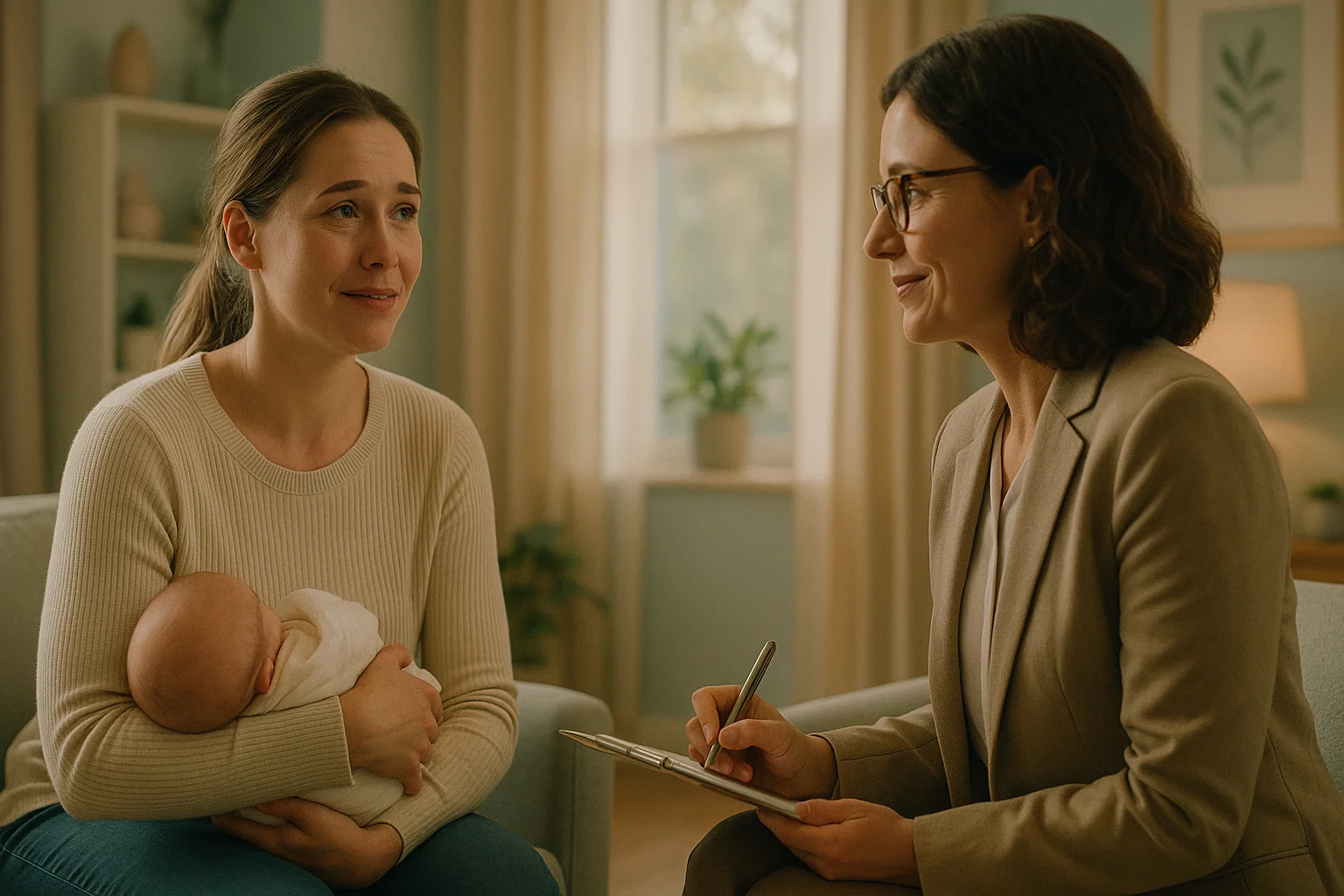
Postpartum Mood Disorder Length Compared to Baby Blues
Baby Blues
- Start a few days after birth
- Last up to two weeks
- Improve on their own
Postpartum Depression
- Last longer than two weeks
- Affect daily life
- Often require treatment
Knowing the difference helps people seek help sooner.
When Should You Seek Help?
You should seek help if symptoms:
- Last more than two weeks
- Get worse over time
- Make it hard to care for yourself or your baby
- Include thoughts of harm or hopelessness
Seeking help is a sign of strength, not failure.
How Treatment Can Shorten Postpartum Depression
Therapy
Therapy helps parents understand feelings, reduce guilt, and learn coping skills. It creates a safe space to heal.
Medication
Some people benefit from medication that helps balance brain chemistry. A provider can explain safe options, especially for breastfeeding parents.
Lifestyle Support
Sleep, nutrition, gentle movement, and stress support all play a role in healing.
How Loved Ones Can Help
Loved ones play a powerful role in recovery. Simple actions can make a big difference.
Helpful support includes:
- Listening without judgment
- Helping with baby care
- Encouraging rest
- Supporting treatment decisions
Feeling supported helps reduce the length of postpartum depression.
How We Help You Heal at We Level Up WA
We know PPD affects the whole family, so we care for you in kind ways. Our programs include:
- Talk Therapy Things like cognitive behavioral therapy help change hard thoughts and build coping skills.
- Medicine When It Helps Safe options (like some approved for PPD) can balance your mood. We work with you and your doctor.
- Support for Body and Mind We talk about rest, good food, gentle movement, and calm practices like deep breathing.
- Group and Family Help Meet other moms who understand. Include your partner or family so they know how to support you.
You can get care that fits your life, like inpatient sessions while caring for your baby.
When to Get Help Right Away
Is It Ever Too Late to Get Help?
It is never too late. Some people do not realize they have postpartum depression until months or even years later. Treatment can still help, no matter when symptoms started. Healing is always possible.
Get Help. Get Better. Get Your Life Back.
Searching for Accredited Dual Diagnosis Mental Health Centers Near You?
Even if therapy failed previously, or are in the middle of a difficult crisis, we stand ready to support you. Our trusted behavioral health specialists will not give up on you. When you feel ready or just want someone to speak to about counseling alternatives to change your life call us. Even if we cannot assist you, we will lead you to wherever you can get support. There is no obligation. Call our hotline today.
FREE 24/7 Dual Diagnosis Mental Health Services HotlineFAQs About Postpartum
How long does postpartum depression last without treatment?
It can last a year or longer and may continue if left untreated.
Can postpartum depression go away on its own?
Some mild cases improve, but many people need support to fully heal.
Does treatment really help shorten PPD?
Yes. Treatment often reduces symptoms faster and supports lasting recovery.
Can postpartum depression return?
It can return during future pregnancies or stressful times, but early care helps.
Is postpartum depression the same for everyone?
No. Each person’s postpartum depression timeline is different.
Can partners experience postpartum depression?
Yes. Partners can also experience postpartum mood disorders and need support.
Take a Step Forward
If you are wondering how long does postpartum depression last, know that healing looks different for every person. With care, support, and time, many parents feel better and regain confidence in their lives and parenting. You do not have to face this alone or wait for things to get worse. Help is available at We Level Up Washington, and recovery is possible. Reach out today to learn how support and treatment can help you or someone you love move toward relief, strength, and hope.
Experience Transformative Recovery at the We Level Up Treatment Center.
See our authentic success stories. Get inspired.
Get the help you deserve.
Start a New Life
Begin with a free call to a behavioral health treatment advisor. Learn more about our dual-diagnosis programs. The We Level Up treatment center network delivers recovery programs that vary by each treatment facility. Call to learn more.
- Personalized Care
- Caring Accountable Staff
- World-class Amenities
- Licensed & Accredited
- Renowned w/ 5-Star Reviews