

Divorce and Mental Health Impact
Understand the relationship between divorce and mental health in Washington state. How one impacts the other and what we can do to mitigate the problem.
Clinically Reviewed by Lauren Barry, LMFT, MCAP, QS
Medically Reviewed by Ali Nikbakht, PsyD
Updated on June 5, 2026 — Editorial Policy | Research Policy
Divorce can be one of the hardest events in life. The divorce and mental health impact is real. It affects your feelings, your behavior, and your everyday life. Adults often feel sad, worried, or angry. Children may feel scared or confused. Coping with divorce stress can be very hard. At We Level Up Washington, we help families and individuals get through this tough time. Learning about the emotional effects of divorce and getting help early can improve mental health after separation.
Divorce changes more than a marriage. It changes family routines, money, and daily life. Children, parents, and even extended family can feel the stress. Emotional challenges may include sadness, worry, or anger. Our goal is to teach healthy ways to cope. We also help families support each other during this time. Getting the right support during divorce recovery is important for everyone.

What Is Divorce and Mental Health Impact?
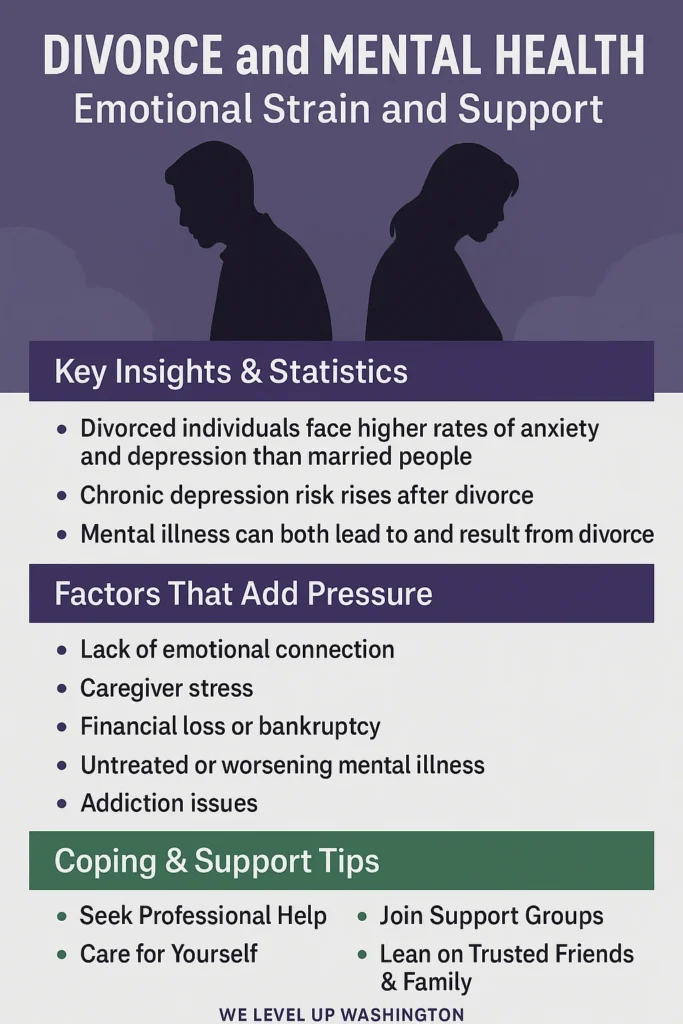
The divorce and mental health is how divorce affects your mind, body, and behavior. Adults may feel anxious, depressed, or tired. They may have trouble sleeping or eating. Children may act out, be quiet, or struggle at school. Studies show adults who go through divorce are twice as likely to report emotional struggles as married adults (NIH, 2021).
Mental health after separation can also be affected by arguments, money problems, or a lack of support. Divorce can make old mental health problems worse. Some people may feel stressed all the time. Children may feel confused or unsafe. Understanding these effects early can help families get support and reduce stress.
Professional care is very important. Therapists teach coping with divorce stress. They also teach ways to handle emotions and talk to family members. Early help benefits children, parents, and the whole family. Getting support during divorce recovery can prevent long-term mental health problems.
Skip To
Table of Contents
Signs You May Need Help With Divorce and Mental Health
It is important to notice the emotional effects of divorce. Signs that someone may need help include:
- Feeling sad or hopeless most days
- Anxiety or panic attacks
- Anger or irritability
- Trouble sleeping or changes in appetite
- Avoiding friends or family
- Trouble handling daily tasks
- Using alcohol or drugs to cope
If you notice these signs, it may be time to ask for help. Early therapy can reduce stress and improve mental health after separation. Children also benefit when adults learn healthy ways to cope.
End the Emotional Pain. Get Your Life Back.
Feeling Depressed, Anxious or Struggling with Mental Health Illness? Get Safe Comfortable Mental Health Dual Diagnosis High-Quality Therapy From Counselors That Care. Begin Your Recovery Now.
Hotline: (509) 348-4077

Why Choose We Level Up Washington for Divorce and Mental Health
At We Level Up Washington, we help families and individuals during divorce recovery. Our team understands the emotional effects of divorce. We guide clients through every step. Programs focus on both mental and emotional challenges after separation.
Our licensed therapists use proven methods. They teach coping with divorce stress, emotional control, and communication skills. Our staff has many years of experience helping families through divorce.
We provide a safe place for children and adults. Families learn to reduce arguments, rebuild trust, and strengthen bonds. Programs focus on holistic care and improving mental health after separation.

What to Expect During Divorce and Mental Health Treatment
Treatment begins with a careful assessment. Therapists check stress, family relationships, and mental health history. Every client gets a plan made just for them.
Therapy can include one-on-one counseling, family sessions, or group support. Clients learn to cope with divorce stress, handle emotions, and talk to family members. Programs are made for parents, children, and the whole family.
Families also learn about the emotional effects of divorce. Clients practice talking calmly, managing anger, and helping each other. Therapy teaches families to stop harmful patterns and build emotional strength.
Sessions are simple and focused on real-life problems. Families learn to rebuild trust, improve relationships, and create a calm home environment. Support during divorce recovery helps adults and children feel safer and stronger.
Get Help. Get Better. Get Your Life Back.
Searching for Accredited Dual Diagnosis Mental Health Centers Near You?
Even if therapy failed previously, or are in the middle of a difficult crisis, we stand ready to support you. Our trusted behavioral health specialists will not give up on you. When you feel ready or just want someone to speak to about counseling alternatives to change your life call us. Even if we cannot assist you, we will lead you to wherever you can get support. There is no obligation. Call our hotline today.
FREE 24/7 Dual Diagnosis Mental Health Services HotlineBenefits of Divorce and Mental Health Programs
- Personalized help for mental health after separation
- Learn to cope with divorce stress from trained therapists
- Better communication with family and children
- Less sadness, anxiety, and worry
- Stronger family bonds and emotional strength
- Simple ways to handle stress and conflict
These benefits help families move forward. Healing is possible with support and guidance. Programs focus on both short-term help and long-term recovery.

Support During Divorce Recovery
Getting help is important during divorce recovery. Families who get help early report less stress. Children feel safer when adults handle stress well. Parents feel more in control of their emotions.
Therapy teaches ways to manage the emotional effects of divorce. Clients learn to talk calmly and solve problems. Families also learn simple routines for home life, money, and stress. This guidance helps children and adults develop healthy habits.
Support can come from individual counseling, family therapy, or group sessions. Everyone learns to cope with divorce stress and emotional control. Early help strengthens family bonds and reduces long-term mental health problems.
How to Get Started With Divorce and Mental Health
Getting started is easy. Call We Level Up Washington to speak with a support specialist. We help with insurance, answer questions, and set up your first session.
Early help improves mental health after separation. It also protects children from long-term stress. Families who attend therapy report better communication, less conflict, and stronger emotional health. Start your healing today. Regain balance, confidence, and calm in your life.
Comfortable Facilities & Amenities
High-Quality Mental Health Services & Behaviroal Health Substance Abuse Treatment
Rehab Centers TourRenowned Mental Health Centers. Serene Private Facilities. Inpatient Rehab Programs Vary.
Mental Health Helpline: (509) 348-4077Proven recovery success experience, backed by a Team w/ History of:
15+
Years of Unified Experience
100s
5-Star Reviews Across Our Centers
10K
Recovery Success Stories Across Our Network
- Low Patient to Therapist Ratio
- Comprehensive Dual-Diagnosis Treatment
- Complimentary Family & Alumni Programs
- Coaching, Recovery & Development Events
- Comfortable Onsite Medical Detox Center
FAQs About Divorce and Mental Health Impact
-
How does divorce affect mental health?
Divorce can increase sadness, anxiety, and stress for adults and children. The emotional effects of divorce may last months or years. Therapy and support can help reduce these feelings.
-
Can children have mental health problems after divorce?
Yes. Children may feel sad, anxious, or act out. Early support teaches healthy coping and emotional control.
-
What are the emotional effects of divorce?
Adults may feel sadness, anger, or worry. Children may struggle at school or withdraw. Therapy helps families manage these feelings.
-
How can therapy help during divorce recovery?
Therapy teaches coping with divorce stress, emotional control, and communication. Families also rebuild trust and strengthen bonds.
-
Who should seek help for divorce and the mental health impact?
Any adult or family facing ongoing sadness, stress, or conflict can benefit. Early support improves mental health after separation.
-
Can therapy reduce the long-term effects of divorce?
Yes. Therapy improves emotional health and teaches coping skills. Families learn to prevent long-term stress and break harmful patterns.
Related Resources
- National Institute of Mental Health – Emotional Health
- SAMHSA – Coping with Stress
- Mental Health Treatment | We Level Up WA
- Child Mind Institute | Transforming Children’s Lives