

Sadistic Personality Disorder: What You Need to Know
Sadistic Personality Disorder stands as a complex and perplexing mental health condition, characterized by a distinctive pattern of sadistic behaviors and a profound lack of empathy. This article delves into the depths of Sadistic Personality Disorder, unraveling its definition, potential causes, and the often subtle yet significant symptoms that manifest in individuals grappling with this disorder. By shedding light on these essential aspects, we hope to deepen understanding and promote early recognition for effective interventions and support.
Clinically Reviewed by Lauren Barry, LMFT, MCAP, QS
Medically Reviewed by Ali Nikbakht, PsyD
Updated on January 10, 2026 — Editorial Policy | Research Policy
Sadistic Personality Disorder can feel confusing and overwhelming, especially when the behavior impacts relationships or daily life. Understanding these traits is an important first step toward meaningful change. Many people begin this journey by exploring how past experiences may shape current behavior, and seeking DBT therapy can provide valuable clarity and support for those wanting to understand these deeper patterns.
In this guide, we break it down simply. We talk about signs, causes, and ways to get better. Our goal? To make you feel seen and give clear steps forward. Let’s start with the basics.
Skip To
Table of Contents
What Is Sadistic Personality Disorder?
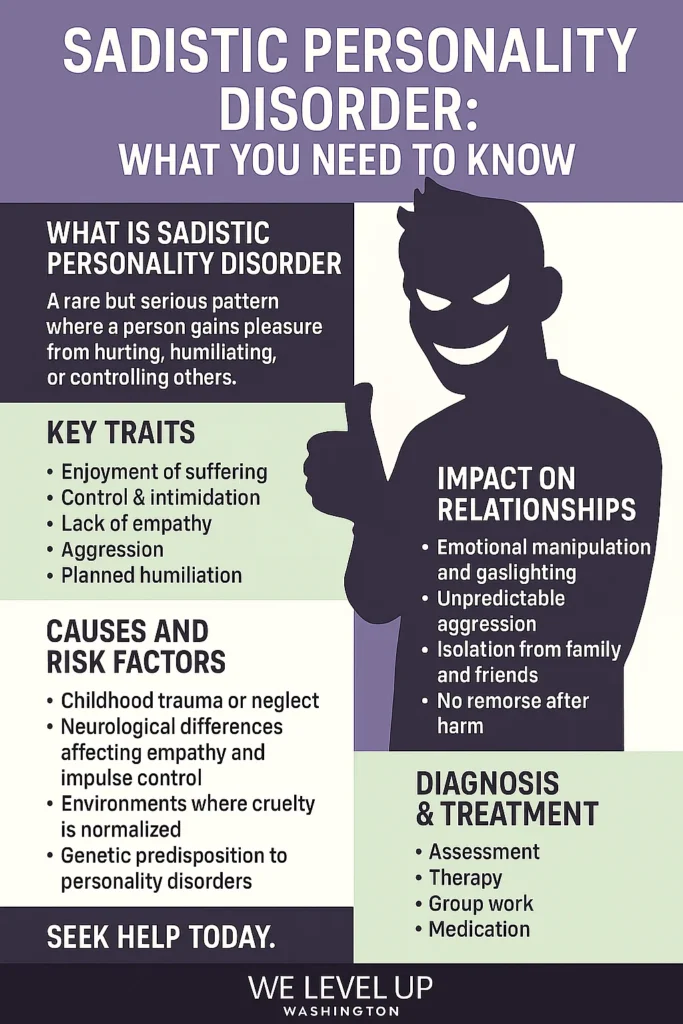
Sadistic Personality Disorder means a person shows a steady habit of being cruel. They enjoy making others suffer. This can happen through words, actions, or control. Think of it as a mindset where pain gives them power.
Experts once listed it in the Diagnostic and Statistical Manual of Mental Disorders, or DSM-III. That book helps doctors spot mental health issues. But later versions, like the DSM-5, dropped it as its own thing. Why? It overlaps with other problems, like antisocial personality disorder. Still, many doctors spot these traits in real life. They treat them as part of bigger patterns.
A sadist person does not just snap once. The behavior sticks around. It harms relationships and daily life. If this sounds like your story, know that understanding it is the first step to change.
Key Facts from Trusted Sources
The National Institute of Mental Health notes that personality disorders affect how we think and act. They can lead to tough times at work and in love.
Signs of a Sadist Person
Spotting sadistic personality traits helps you protect yourself or seek aid. A sadistic individual often acts coldly. They lack empathy. That means they do not feel bad for others’ hurt.
Look for these common signs:
- They enjoy pain: A sadist personality finds thrill in tears or fear. They might smile when you cry.
- Control rules them: They boss others around. It makes them feel strong.
- Aggressive behavior pops up: Words cut deep. Or they push too far with their hands.
- No real sorry: After harm, they shrug it off. Remorse stays missing.
- Humiliation is fun: They tease to break spirits. It boosts their ego.
These acts build over time. In kids, it might start as bullying. In grown-ups, it turns into fights or worse. Every day, sadism shows in small ways, like online trolls who love to upset folks. But when it hurts real lives, it needs care.
If these behaviors impact your life or relationships, consider exploring professional personality disorder treatment, which offers structured therapeutic intervention and support through evidence-based modalities.
How Sadistic Personality Affects Daily Life
Living with sadistic tendencies drains everyone. The person feels empty inside. Others walk on eggshells. Relationships crack under the weight.
Impact on Close Bonds
In love or family, trust fades fast. One day, a sadistic partner would put you down, the next day, he or she would be sweet to you. You are lost and snared in this cycle. This cycle confuses and traps you. Friends pull away. Kids learn fear over fun.
Emotional abuse hides in jokes that sting. Physical abuse risks real danger. If you feel scared at home, that’s a red flag.
Broader Effects on Mental Health
Sadistic behavior is linked to other issues. It often pairs with antisocial personality disorder, where rules mean nothing. Or sexual sadism disorder, focused on intimate pain for pleasure.
For anyone needing clear next steps or access to support resources, We Level Up Washington provides direct pathways to professional help and local services.
End the Emotional Pain. Get Your Life Back.
Feeling Depressed, Anxious or Struggling with Mental Health Illness? Get Safe Comfortable Mental Health Dual Diagnosis High-Quality Therapy From Counselors That Care. Begin Your Recovery Now.
Hotline: (509) 348-4077

Causes of Sadistic Personality
No one chooses this path. Roots run deep. A mix of past hurts and brain wires shapes it.
Early Life Factors
Many sadistic individuals face tough starts. Abuse in childhood teaches cruelty as normal. Neglect starves the heart of care. Families with fights model bad ways.
Brain and Genes at Play
Your mind’s wiring matters. Parts that handle feelings might work differently. Genes pass down risks. If relatives have personality woes, odds rise.
The environment adds fuel. Harsh schools or mean groups reward tough acts. But remember, causes explain. They do not forgive harm.
The National Library of Medicine shares data on trauma’s long reach. See their article on adverse childhood experiences for proof.
Get Help. Get Better. Get Your Life Back.
Searching for Accredited Dual Diagnosis Mental Health Centers Near You?
Even if therapy failed previously, or are in the middle of a difficult crisis, we stand ready to support you. Our trusted behavioral health specialists will not give up on you. When you feel ready or just want someone to speak to about counseling alternatives to change your life call us. Even if we cannot assist you, we will lead you to wherever you can get support. There is no obligation. Call our hotline today.
FREE 24/7 Dual Diagnosis Mental Health Services HotlineDiagnosis in the Manual of Mental Disorders
Doctors use the Diagnostic and Statistical Manual to check minds. Sadistic Personality Disorder sat in the DSM-III appendix. It needed proof of cruel acts for joy, not just anger.
Today, pros look at the whole picture. They rule out other fits, like borderline traits. Steps include:
- Talk sessions: You share your story. Patterns emerge.
- Tests: Quizzes spot empathy gaps.
- Watch closely: How do you act over weeks?
Diagnosis takes time. It aims to heal, not label.
Treatment Paths for Sadistic Tendencies
Change feels hard, but it happens. Sadistic people resist help. They see no wrong. Yet, with will, therapy rebuilds.
Talk Therapies That Work
Start with cognitive behavioral therapy, or CBT. It flips bad thoughts. You learn to pick kind acts over cruel ones.
Dialectical behavioral therapy, DBT, builds skills. It teaches calm in storms. Group talks help too. Hear others. Grow empathy.
Behavior therapy targets habits. Rewards come for good choices.
Meds and Extra Support
Pills ease side issues, like wild moods. No fix-all drug exists for this. Pair it with counseling.
At We Level Up Washington, we blend these. Our team crafts plans just for you.
Success needs commitment. Many find peace. You can too.

Comfortable Facilities & Amenities
High-Quality Mental Health Services & Behaviroal Health Substance Abuse Treatment
Rehab Centers TourRenowned Mental Health Centers. Serene Private Facilities. Inpatient Rehab Programs Vary.
Mental Health Helpline: (509) 348-4077Proven recovery success experience, backed by a Team w/ History of:
15+
Years of Unified Experience
100s
5-Star Reviews Across Our Centers
10K
Recovery Success Stories Across Our Network
- Low Patient to Therapist Ratio
- Comprehensive Dual-Diagnosis Treatment
- Complimentary Family & Alumni Programs
- Coaching, Recovery & Development Events
- Comfortable Onsite Medical Detox Center
Protecting Yourself from Sadistic Behavior
If a sadist hurts you, act now. Your well-being counts.
- Set firm lines: Say no to mean acts. Walk away if needed.
- Build a net: Tell friends. Join support groups.
- Track it: Note bad times. It aids talks with pros.
- Call for aid: Hotlines listen. In Spokane, dial us at (509) 348-4077.
Love does not mean taking pain. You shine brighter without it.
FAQs About Sadistic Personality Disorder
-
What Is a Sadistic Person?
A sadistic person consistently seeks pleasure from inflicting emotional, psychological, or physical pain on others, often framing it as a natural expression of their need for control and superiority in relationships.
-
How Do I Know If It’s Sadistic Personality Disorder or Just Anger Issues?
Look for the pleasure element: if harm brings genuine satisfaction rather than fleeting relief, and it spans multiple relationships, professional assessment clarifies the distinction.
-
Can Sadistic Tendencies Link to Other Disorders?
Yes. It often teams with antisocial personality disorder. Or sexual sadism disorder for bedroom focus. Pros sort it out.
-
How Does Sadistic Personality Disorder Differ from Narcissism?
While both involve low empathy, SPD centers on deriving joy from cruelty itself, whereas narcissism prioritizes self-elevation through admiration or manipulation.
-
Is There a Link Between Substance Use and Sadistic Behaviors?
Yes, alcohol or drugs can lower inhibitions, amplifying traits in vulnerable moments, making integrated treatment for both essential for lasting recovery.
-
Can Sadistic Personality Be Inherited Through Family Patterns?
While genetics may predispose someone toward certain traits, environmental factors like upbringing play a larger role in shaping a full sadist personality, emphasizing the value of early intervention to break generational cycles.
-
Where in Spokane Valley, Washington Can You Find Treatment for Sadistic Personality Disorder?
At We Level Up Washington in Spokane Valley, our team specializes in personality disorder care, offering personalized therapy sessions that address root causes with compassion and expertise.
-
Where in Liberty Lake Can You Find Treatment for Sadistic Personality Disorder?
Liberty Lake sits near Spokane. Drive to We Level Up Washington for help. We treat sadistic traits with kind, skilled therapy.
World-class, Accredited, 5-Star Reviewed, Effective Mental Health Dual Diagnosis Programs. Complete Integrated Inpatient Rehab with Free Post Discharge Therapy Planning.
Hotline: (509) 348-4077End the Emotional Pain Rollercoaster. Gain Stability & Happiness Through Recovery Treatment. Start Mental Health Counseling Today. Get Free No-obligation Guidance by Behaviroal Health Specialists Who Understand Mental Health Recovery.
Conclusion
You made it through this guide. Sadistic Personality Disorder touches deep pains, but light waits ahead. It steals joy from givers and takers alike. Yet, with clear eyes, you spot paths out. seeking help shows strength, not weakness. Whether you face these traits or love someone who does, healing starts with one call.
Take that step today. Contact We Level Up Washington: (509) 348-407, we meet you where you stand. Our team crafts safe spaces for growth.
Medical source
https://medlineplus.gov/ency/article/000939.htm
https://www.ncbi.nlm.nih.gov/books/NBK556058/
https://pmc.ncbi.nlm.nih.gov/articles/PMC10654167/
https://digitalcommons.csp.edu/cgi/viewcontent.cgi?article=1057&context=forensic_scholars_today